comment 0

the overview effect

When astronauts leave Earth, there is a well documented phenomenon that occurs.

The Overview Effect.

The Overview Effect is a cognitive shift: a sudden change in awareness reported by astronauts, often while viewing the Earth from outer space.

It refers to the experience of seeing firsthand the reality of Earth in space, which is immediately understood to be this fragile ball of life.

A tony, fragile orb of blue and green suspended in the void.

Shielded and nourished by a paper-thin atmosphere, 60 miles thick.

From space, astronauts tell us, national boundaries vanish.

The conflicts that divide us become less important.

It’s the uncanny sense of understanding the “big picture.” Of feeling connected to — and yet bigger than — the complex interactions that exist on the ground.

And more than anything, looking at Earth from space and recognizing the fragility of this “pale blue dot” transforms into an overwhelming desire to protect it.

As Carl Sagan profoundly says:

“There is perhaps no better a demonstration of the folly of human conceits than this distant imae of our tiny world.”

comment 0

keepers of the fire

I learned a beautiful phrase today: keepers of the fire.

This is what the Potawatomi tribe call themselves. In fact, the word “Potawatomi” means “keepers of the fire.”

Historically, they were one of three tribes that formed the Council of Three Fires meant to uphold peace.

(1) Ojibwe: Older Brother, “Keepers of Faith
(2) Odawa: Middle Brother, “Keepers of Trade
(3) Potawatomi: Youngest Brother, “Keepers of the Fire

As the “youngest brother”, the Potawatomi had the last entry into the Council. As such, their role was to tend to the Sacred Fire, literally and figuratively, to manage the ceremonial fire and by tending to the alliance to ensure peace.

Their story is one of heartbreak and tears.

Due to the voracious appetite of European / American settlers of land, like countless other Indian tribes, the Potawatomi were ruthlessly pushed from their lands and forced to migrate west.

The great migration displaced generations of tradition, history, language, culture. Not to mention lives.

So much of indigenious history is layered with tragedy and trauma. Most tragic of all may be that so much of this history is slowly being forgotten.

The culture and their history dies with every story that remains unspoken, that does not pass through generational wisdom.

Yet while there has been so much tragedy, there is also hope.

The Sacred Fire was extinguished many generations ago. However, in modern times, the “Keepers of the Fire” have a new fire to protect — the preservation of their heritage.

The Potawatomi are one of the few that managed to successfully preserve much of their native culture, rituals, and language.

Learning about indigenous history and the Potawatomi tribe leads me to wonder about the fires that have been extinguished, as well as take inventory of the fires in my own life that need tending to.
More importantly, I’ve realized that keeping a fire alive is a tricky business. Someone must always be there to ensure the fire will burn — especially through the night. Help is required.

As I continue reflecting on the significance of this phrase “keepers of the fire”, I wonder what other fires need “keepers” during their overnight shifts, to keep their flames alive.

comment 0

what we think when we think about thinking

The subject of thinking continues to fascinate me.

Recently, a group of us from diverse backgrounds and countries came together to discuss. Together in a panel conversation with an engineer, doctor to be, software developer, physicist, and yours truly, we talked about what we think about when we think about thinking.

Specifically, around problem solving.

Framed through our different careers and life experiences, below is a summary of key insights:

Your rational brain can only work as effectively as your emotions allow you to.

Problem solving must start with a mentally clear headspace. Learning how to manage emotions is a must for effective problem solving.

The first step to problem solving is defining the problem.

We must always consider that the problem may be different than what you think.

Not all problems are created equal.

Some need to be solved under extreme time pressure, for example solving trading problems in finance. The same could not be said of problem solving for a rocket launch.

How you approach the problem depends strongly on the context of the problem itself.

Think of problems as a feature, not a bug.

When you are solving a long term problem, you want to go deep. You want the problems to appear.

Reframe the relationship with problems and make friends with our problems.

In other words: “think of problems like golden eggs.” They are a gift that can help you solve for a better world.

comment 0

anatomy of a word: 忍

The Chinese character 忍 is often translated as ‘to endure.’

Like other cross language translations however, it does not cover the full scope of the word. Nor does it capture the deeper aspects of this beautiful language I’ve grown up with, and am only now beginning to realize its poetry.

‘To endure’ feels like an oversimplification of the word.

忍 (rěn) also means: to bear, to tolerate, to have patience.

To restrain oneself.

Like other words in my language, the character 忍 can be broken down into simpler characters to comprise a whole.

The ‘刀‘ on the top stands for ‘knife.’
The ‘心‘ on the bottom means ‘heart’, or ‘soul’.

Combined together, it symbolizes the endurance of suffering. To withstand the pain and suffering of a knife to the heart.

While there are many things I appreciate and value in my heritage, this is one of the few I do not.

This word appeared too frequently in day to day language for my liking. Growing up, phrases related to this word were used far too often.

My parents had no choice but to endure the hardships of immigration, stereotypes, “bamboo ceilings,” and escaping poverty. I’ve also grown up learning to grit my teeth.

To tolerate, suppress, and bear negative emotions or challenges.

To 忍.

忍 (rěn) is spelled phonetically the same as the character from an earlier essay, 仁 (rén).

仁 (rén) stands for compassion, kindness, humanity.
忍 (rěn) stands for tolerance, patience, endurance.

It’s funny how two words spelled exactly the same can carry such different meanings. I cannot help but feel these two concepts are interrelated.

Maybe having these two juxtaposing characters side by side was intentional by design.

comment 0

the cutting room floor

As I navigate the 250 word count of an atomic essay (and failing miserably despite my best efforts), I’ve been thinking a lot about the cutting room floor and the stories we leave behind.

For example, in Ali Wong’s standup Baby Cobra, she talks about a pregnancy that ends in miscarriage. The audience is quiet with the tension that builds.

Where is the punchline?

Eventually she gives the audience the relief they were waiting for: she reveals her miscarraige was a blessing in disguise because they were twins.

She extends the joke further, talking about how she used it as leverage for a Beyonce concert. And how she got a miscarriage bike out of it, that she loves very much. With that final punchline, she moves onto the next joke.

The first time I watched the Netflix special, I moved on as well. It wasn’t until I read her memoir that I understood there was so much more she chose not to reveal.

In the book, she talks about her feelings of shame and questioning her body’s ability to do what we are biologically programmed to do. How she took edibles every weekend to cope with her grief.

She chose to omit the grief and healing of a painful moment; abandoned on the cutting room floor as an editorial decision. As a woman who is thinking about starting my own family soon, I would have learned so much if she processed this experience further.

But Ali Wong had a constraint: she has to fit every ounce of comedy she can into a 60 minute show. The same applies to these atomic essays.

In my earlier essay on kindness, the tense relationship with my father never made it into the story. Nor the fight that resulted afterwards in this conversation, when I made some snarky retort, angry that he wished I had more kindness in me.

And so this makes me wonder:

What untold stories have been left behind?
And what untold truths?

comments 2

anatomy of a word: 仁

When I was in high school, my father participated in a work leadership retreat. During the trip, it came up that my father had a daughter.

The facilitator asked my father to write down one word, one wish my father wanted for me.

For some additional context, my family and I were living in China then, so the workshop was conducted in Chinese.

My father wrote down one word: “仁” (rén).

Breaking down the character, the subcomponents of “仁” could be interpreted to mean “two people.”

The “亻” on the left side stands for ‘person’.
The “二” on the right means the number ‘two’.

Instead, the actual translation for “仁” can be partially expressed through English words like “benevolence,” “humane,” and “love.” In my head I usually simplify it down to the English word: kindness.

It is a virtue, and the foundation for Confucian philosophy.

There’s something poetic about the meaning of the sub characters that relate to the actual definition of the word.

I like to think these Chinese characters interpret kindness as the relationship between two people. There is nothing more humane than being with another human. After all, there is no better way to exhibit kindness than to show love for another person.

As a self-involved teenager at the time, I didn’t have the capacity to understand the magnitude of this wish. Being older now, I appreciate it so much more.

To be human is to be kind.

In fact, the word is pronounced exactly the same as the word for human beings, “人” (rén).

And in essence, to be kind is to love.

Therefore, by transitive property, to be human is to love.


comment 0

understand fear to have courage

“When I was a little kid, I was really scared of the dark. But then I came to understand, dark just means the absence of photons in the visible wavelength — 400 to 700 nanometers. Then I thought, well, it’s really silly to be afraid of a lack of photons. Then I wasn’t afraid of the dark anymore after that.” —Elon Musk

Learning about Elon Musk’s relationship with fear helped me realize: the best way to ignite courage is to understand your fear.

Fear is a deeply primitive emotion: an ancient instinct for safety we inherited from our ancestors on the savannah.

And on the savannah, safe we were not. Threats existed everywhere. Fear was part of our evolutionary development: an automated response to these threats crucial to our survival as a species.

Fast forward to present day, we no longer live in a world of scarcity. Safety is abundant, along with health, nourishment, longevity, and resources. But as we evolved along with our environment, this fear of harm did not.

That is why so many of our modern day fears originate in our minds — and in many senses, are irrational. They represent this need for psychological safety.

My fear of publishing, like many of our other modern day fears, is also irrational. Irrational it may be, but the physical response is pretty effing real.

This fear stems from our evolutionary need to feel accepted, to not feel failure. Failure lends itself towards rejection.

Which for our ancestors often meant that we would be outcast. And as social, extremely vulnerable creatures compared to the predatory lion, we fare much better in a crowd than on our own.

So, I’ve realized: this irrational fear is just my body’s ancestral desire to crave acceptance.

My fear wants to make sure I won’t be left behind, hence it wants to stop me from taking these creative risks. To ensure I won’t be banished from the herd.

But if this experiment fails, I still have shelter. I still have food. And people that care and accept me. I am not in physical danger.

It’s strange. But by realizing this connection to my ancestors, suddenly I feel less afraid. And so, I will leave you with this final afterthought:

“Nothing in life is to be feared, it is only to be understood. Now is the time to understand more, so that we may fear less.” —Marie Curie

comments 2

anatomy of a language

Language is a beautiful thing.

I’ve been learning about the language of indigenous culture, plants and the Earth through the book ‘ Braiding Sweetgrass.’ Reading about these new and foreign languages got me thinking more about the languages I’ve grown up with, English and Chinese.

For example, take the English word for astronomy.

Astronomy in Ancient Greek is ἀστρονομία.

I never took Latin, but I’ve come to learn that so much of a word’s meaning can be derived from the root word.

“ἀστρον— ” means astron, or “star”
“—νομία” is derived from the word νόμος meaning nomos, or “law / culture.”

Combined together, astronomy means “law of the stars” (or “culture of the stars” depending on the translation.)

To me, this has beautiful meaning.

The same can be said for Chinese.

Like English, the subdivisions of a word carry so much meaning.

In Chinese, something spelled the same way can be pronounced four different ways based on intonation. And each character consists of different root words.

For example, the characters below are spelled phonetically the same: “ma.” But they are pronounced four different ways, and mean four different things.

妈 /mā/:mother
麻 /má/:numb
马 /mǎ/:horse
骂 /mà/:curse, scold

Language is a beautiful thing.

As I learn and appreciate more about indigenous language and heritage, with a world view so different from my own, I’ve grown to appreciate the nuances in my own as well.

comment 0

three influences that shaped my life

How do you simplify an existence down to three main aspects?

Even throughout today, I’ve encountered numerous things that have left me changed from this morning. After all, like Alice in Wonderland says:

“I can’t go back to yesterday because I was a different person then.”

There’s no guarantee that these will be permanent, there could be a profound shift tomorrow even — but until then, here are my three:

**(1) My family’s background, culture, and heritage.**

My parents are from one of the poorest provinces in China. Generations before were rice field farmers in a tiny village without electricity, heat, or running water.

Through the power of education and hard work (plus favorable geopolitical timing), my parents helped our family skip at least five or six generations of progress to where we are today.

By the time I was a young adult, we had crossed chasms in socioeconomic and cultural gaps.

Through my parents, I’ve learned what an education can do for you.

**(2) Ta-Nehisi Coates, Between the World and Me**

This book is beyond a letter to Coates’ teenage son — it was a visceral realization of how different the world can be based on the color of your skin and the zip code you live in, how trapped you can be by these two metrics alone.

I will never forget the image Coates described, of being a young boy in a dangerous neighborhood — and the quick scenario analysis that courses through the boy’s body when a threat appears: do I run or do I fight?

“Not being violent enough could cost me my body. Being too violent could cost me my body. We could not get out.”

**(3) My own peripatetic existence.**

I’ve now been in New York for seven years — the longest I’ve stayed in one place since middle school. Some of these places are places I’ve grown roots, and other places I’ve merely been a passerby leaving little to no imprint.

But regardless, these experiences all taught me how to leave something behind and begin again. To (try) and handle change with grace.

comment 0

writing is like a startup: the importance of feedback for startups and writers.

As we build out the course curriculum for our Writing Workshop, I continue to see evidence that the startup metaphor fits so nicely with writing.

In this case, specifically on the subject of feedback:

1) How it applies to startups
2) How writers benefit from it
3) The similarities between the two

Collecting user reactions to a product experience creates feedback loops.

It’s critical to enhance the user experience.

Interviewing and asking for feedback helps startups understand what is confusing or missing about their product.

In short: it helps startups improve.

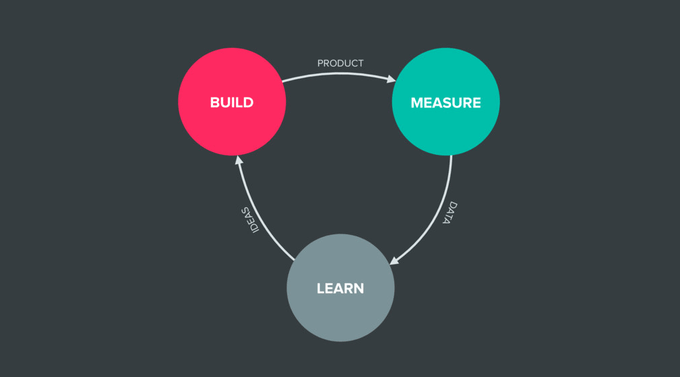
This is a great visual explaining the feedback loop:

1) Build the product
2) Test if it resonates
3) Learn from research how to improve it.

Image

In other words: “The product feedback loop is the process of collecting customer feedback continuously and improving your product based on their opinions.”
@productboard

The same can be said for writing.

As writers, we are developing our own product, too.

When we pursue the elusive concept of “our voice,” we are seeking our own product market fit. Startups use customer feedback to seek product market fit.

The same can be applied to writers.

Like a startup looking for gaps in their product, feedback helps a writer identify gaps in their writing.

Below is a sample list of questions when looking for feedback for writing:

What didn’t you agree with?
What was unclear?
What bored you?
What unnecessary things should be removed?
What unanswered questions were you left with?

These questions can be asked to users and readers, alike.