comment 0

Book Notes and Takeaways: The Upside of Stress

Synopsis

Author and Stanford Professor, Kelly McGonigal continues the conversation from her TED Talk ‘How to make stress your friend‘ and challenges the conventional negative perception towards stress. She shares research behind how leveraging positive psychology creates the right mindset towards stress and actually enriches our day to day life instead of taking away from it.

How you think about stress affects everything from your cardiovascular health to your ability to find meaning in life. The best way to manage stress isn’t to reduce or avoid it, but rather to rethink and even embrace it.

Kelly McGonigal, The Upside of Stress

Key Takeaways

  • Mindsets are beliefs and have both short term and long term impact. When you view stress as helpful, it actually helps change the types of hormones we secrete to manage stressful situations. This allows us to respond differently and possibly perform better.
  • Stress is a response that’s meant to help. Your body’s response to stress is actually biologically there to HELP you through a hard experience. When you try to tamper that down by telling yourself to “calm down” or get rid of those feelings, you’re actually hindering your ability to draw on your body’s response as a resource to help you think clearly, have more energy, and rise to the occasion.
  • Stress alone is not harmful. It is the combination of stress and the mindset that stress is bad for you that causes long term impacts on health. When viewed through a positive mindset, it can be seen as a resource. In fact, it’s been proven that when you perceive stress as limiting, study participants tended towards more self-destructive behaviors as a means to cope.
  • Benefits of Stress. When stress is viewed through a positive mindset, studies have shown how stress has a positive impact on the following:
    • Improved cognitive function.
    • Increased empathy.
    • Renewed purpose or meaning in life.
    • Take on more challenges.
    • Builds resilience and courage.
  • How to Rethink Stress:
    • Excitement versus Anxiety. Reframing stress as “I am excited” instead of “Calm down” helps you feel empowered by stress. It can transfer your stress response from a fight-or-flight responses to a challenge-response, which has been shown to increase confidence and improve performance.
    • Normalize it. Understanding that stress is a normal and an expected part of life helps make it feel less isolating. Feelings of isolation have been shown to have a leading impact on a negative sense of well-being.
    • Bigger-than-self mindset. When you extend your perspective of tasks beyond the benefit it provides to yourself but to how it provides value to others, it can elevate even the most basic tasks.

Quotes to Remember

  • Stress happens when something you care about is at stake. It’s not a sign to run away – it’s a sign to step forward.
  • We are used to believing that we need to change everything about our lives first, and then we will be happy, or healthy, or whatever it is we think we want to experience. The science of mindsets says we have it backwards. Changing our minds can be a catalyst for all the other changes we want to make in our lives.
  • Feeling burdened rather than uplifted by everyday duties is more a mindset than a measure of what is going on in your life.
  • It turns out that how you think about stress is also one of those core beliefs that can affect your health, happiness, and success. As we’ll see, your stress mindset shapes everything from the emotions you feel during a stressful situation to the way you cope with stressful events. That, in turn, can determine whether you thrive under stress or end up burned out and depressed. The good news is, even if you are firmly convinced that stress is harmful, you can still cultivate a mindset that helps you thrive.

Yina’s Reflection

While doing research for this post, I came across quite a number of negative reviews within the science community that challenges McGonigal’s approach to stress and stands their ground on the ill effects of stress.

Regardless, as someone who wants to improve her stress tolerance, I still found a lot of value in this book.

This may be a placebo effect of sorts but even if scientific results were inconsequential, anything that can help me approach stress in a more positive way and enable me to take on larger challenges, I will eat up with a spoon. Spoon and all.

Stress is a loathsome “bad guy” in our games of life, the boss that stands in the way of us reaching that next level in our lives. Collecting weapons to combat this villain has been part of my own hero’s journey so to speak. But reinterpreting that stress, in true Wreck-it-Ralph fashion (great movie, btw, as are Pixar movies in general), as an ally and not an enemy has truly been empowering. I’m learning to discard the sledgehammer I’ve stashed in my toolbelt as a means to crush my stress response when it rears its ugly head.

Being the Bad Guy - GIF on Imgur

For example, when explaining how stress improves resilience, McGonigal references a study of squirrel monkeys that test the assumption that early life stress leads to emotional instability by separating young monkeys from their moms.

What the study showed however, was the opposite: “Stress led to resilience…[they] were less anxious than the more sheltered monkeys…they explored more in new environments, showed greater curiosity, were quicker to solve mental challenges, and showed greater self-control.”

Brain scans even showed demonstrative results: “monkeys who had been separated from their moms developed larger prefrontal cortexes.”

Despite some of the negative backlash from the scientific community, I thoroughly enjoyed McGonigal’s writing, where she effectively weaves storytelling with factual data. We are all under the subtle influence of people and ideas around us, and it is up to us to decide what we want to influence us. For me, perhaps I’m choosing to be fooled that stress is good for me in light of the goals I have ahead.

comment 0

Think Like a CEO: The Best Way to Improve is to Measure

I’m an extremely competitive person.

In our household, I am still banned from playing Settlers of Catan because of my intensity levels. Don’t even get me started on my Chess ban — I have nowhere to channel my Queen’s Gambit energy. With COVID and lockdown, unfortunately these days my partner gets the brunt of my competitive streak. Poor guy. 😦

Don’t hate the player, hate the game. Daniel Craig and I will still hate the player though.

In other life scenarios, I’d like to think I am more amiable than aggressive. But there’s just something about numbers and points. They turn me into this hyper aggressive person focused solely on beating the game. And I’m curious (and hopeful) that I am not the only one.

People play differently when they are keeping score.

Chris McChesney, The 4 Disciplines of Execution

Once you assign points to something, it becomes a metric: a clera score at the end that determines how successful I was. There is no room for ambiguity.

I’ve taken your rook, or I have not.
I’ve amassed enough resources to build my settlement, or I have not.
The result is binary.

Why is measuring important?

What you measure is what you improve. This concept originates with Peter Drucker, the man known for inventing modern business management. Measuring is immeasurably valuable; by measuring or tracking data, it provides you a benchmark. A direction.

Businesses use metrics like key performance indicators (KPIs) as an information gathering resource to identify how a company is progressing to meet their goals. These metrics help firms identify whether they are on track and if not, how much distance separates them from where they are and where they need to be.

In a nutshell, businesses study and enforce metrics to help them achieve better and better results over time.

Now, I’d like to ask you: Why not do the same for yourself?

A Study in Business History: Metrics and Success

I touch on this subject briefly in the earlier post My Quarter in Review regarding how I assess my own “reporting,” and I’d like to elaborate further here: Businesses, like science, operate on hard and quantitative data. Hard data retains a sense of objectivity and no room for interpretation or vagueness.

You either reached your sales forecast, or you did not. You gained this many new customers, or you did not. You can tell if customers like your product based on your sales. Or the quality of your company culture based on your employee turnover.

There’s no guessing: Do we have a good product? Have we built a good team? The metrics themselves help you answer these questions. By making the metrics tied to your goal very clear and defined, it can begin influencing your behavior to help you meet these goals.

And what Jim Collins has discovered in his book Good to Great, is that the great companies are the ones that know what to measure. They’ve properly identified the metrics that help them drive ultimate value to their customers and their organization.

Walgreens, for example, grew to be the largest drug retail chain in America by strategically assessing the correct metrics to measure.

In 1975, $1 invested in Walgreens would skyrocket to $562 by 2000 under his leadership, easily beating the stock market index by 1,500%. Hedge fund managers on the other hand, are considered widely successful when they beat the market by 1.5% annually.

Walgreens: The Bitcoin of the late 1990’s

During this time, Walgreens achieved this by having one strategic goal: to build the best, most convenient drugstore in America.

How does one assess the success of this big, hairy, audacious goal, though?

Walgreens determined a core metric that would align the executive team on what determined convenience.Large retail chains like Walgreen’s rivals at the time focused on profit per store. This metric however created an incentive to REDUCE the number of stores in high traffic and expensive locations and RELOCATE to cheaper and more remote locations.

No one ever called driving 20 miles out of the way to buy some paper towels “convenient”.

Based on competitor strategy, it becomes distinctively clear that while Walgreens and their competitors have the same goal — gaining market share in the convenience store space,  — the metric their competitors defined clearly was not aligned with their goal at all.

In fact, their metric inhibited it. How you define your metrics determines your focus.

By redefining the metric, Walgreens no longer focused on profit per store, and instead began buying up corner lots to focus on high traffic areas. They invested in services that would optimize for a convenient shopping experience in store. They shut down revenue generating stores only to move them one block closer if it meant for a more convenient location.

And these tactics worked.

By 2004, Walgreens chief rival Eckerd sold to CVS, and Walgreens has now upheld its reputation as the most convenient drugstore for multiple decades.

Metrics determine focus

We might not be looking to be the most convenient drugstore, however it is undeniable that as humans, we all carry goals that we want to accomplish for ourselves.

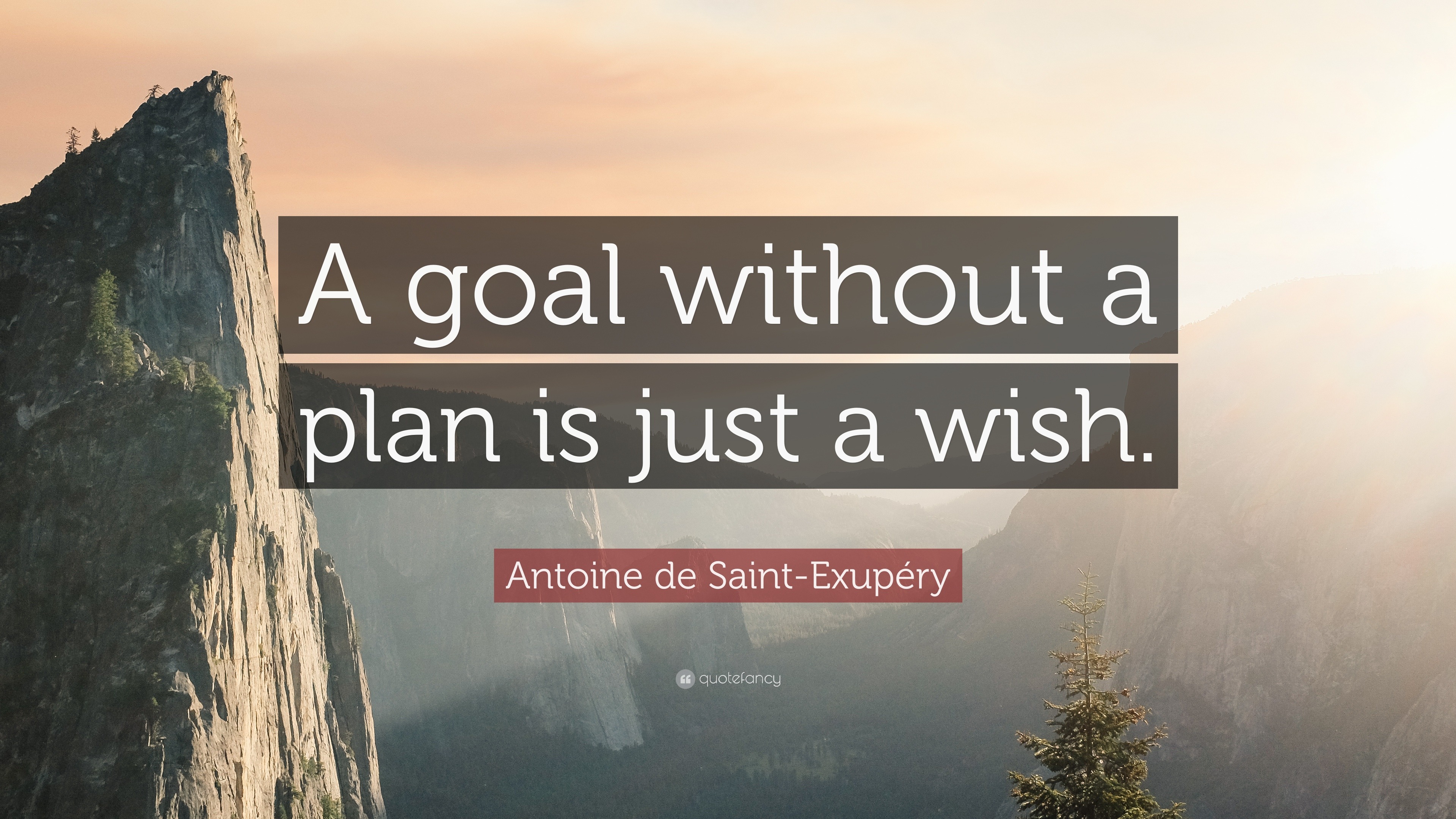
You’ll find tons of quotes related to goals: usually some inspirational quote with beautiful typography backset against picturesque scenery that that doesn’t have much to do with the subject matter at hand.

Antoine de Saint-Exupéry Quote: “A goal without a plan is just a wish.” Quotefancy

Exhibit A from QuoteFancy

And while I am all about planning, I do challenge this approach to goal setting and attainment. Instead, I wonder if the priority should not be in the plan, but in the metrics you define for success.

With established metrics that align with your goals, I sincerely believe the plan becomes easier to build, pivot, and execute. Because you now have a target, understanding what’s working and what’s not becomes crystal clear. This limits the uncertainty and decision paralysis we often face when it comes to vague and unclear goals. It allows you to experiment, try new things, and then return back to your metric to see if the numbers have improved or not.

Businesses recognize that a deliverable needs to come with a metric (and even better, a correct metric) attached to it. Generating a key metric for their business goal then allows them to deploy strategies and initiatives to pursue this target.

Understanding the Walgreen’s case study and recognizing the frequency that metrics are discussed in the business world, I’d like to ask again: How can you apply this to yourself?

Think like a CEO, Measure Yourself

When you begin to think like a business, it becomes much easier to sift through the subjectivity of experience.

There is great value in thinking like a CEO. You belong to a company called You, Incorporated. The product is you. The CEO is you. The metrics are the metrics associated with progress towards your goals.

If you’re not tracking your spending, how will you know if you have enough to pay off your credit card? If you’re not tracking improvement towards your goals, how will you know if you’re getting any better?

Therefore, it’s important to 1) measure yourself and 2) pick the right metrics to incentivize the behavior you are looking for.

Stay tuned for Part 2: Think Like a CEO, Pick the Right Metrics

comment 0

Think Better: 3 Reasons to Ask the Hard Questions

I’m sure we have all experienced this at some point in our lives: that crushing feeling of helplessness and frustration in the face of a challenging situation.

I felt this way often in my past hedge fund life. Now that I’m trying to bring a product to launch, I feel this way all. the. damn. time.

In the corporate landscape, particularly in the hedge fund world, the issues are complex and things move quickly. Extremely quickly.

I remember the not-so-fond feeling of panic that would swell up in my chest, as I frantically sifted through portfolio data troubleshooting the root cause of an incorrect trade. If you think Eminem’s palms were sweaty, try having a portfolio manager breathing impatiently into your headset waiting for you to explain why it looks like his fund suddenly lost millions of dollars.

Sweats Profusely GIFs - Get the best GIF on GIPHY

With the time pressure to perform, I remember I would often think: “I wish I were smarter. I wish I were better.

While invisible on the outside, this emotional suffering is acute — like a knife stab to the chest.

Heart wrenching.
Demoralizing.

Please and thank you. No drama or anything.

I continue to work on managing this feeling to this day. These days, in moments when I feel this, it’s often helpful to remind myself that the solution I’m really looking for is how to problem-solve better.

When facing challenges or roadblocks to my productivity, I’ve found studying methods of critical thinking and problem solving as one of the most effective ways to manage negative emotions of frustration or overwhelm.

This can often be boiled down into a key skill: asking better questions.

Below are reasons why it’s more important to invest time in questions, rather than answers.

1. Accelerate Learning

“Although providing employees with answers to their problems often may be the most efficient way to get things done, the short-term gain is overshadowed by long-term costs. By taking the expedient route, you impede direct reports’ development, cheat yourself of access to some potentially fresh and powerful ideas, and place an undue burden on your own shoulders.”

Source: How to Ask Better Questions, Harvard Business Review

While it may be far easier to Google the solution or ask for help, the benefit of asking questions to identify solutions on our own compounds in value over time by allowing us to think more creatively. This gives us the ability to make new connections and better forms of pattern identification.

As we learn to ask ourselves questions, this allows us to grow as independent thinkers and boost our productivity in the long term as we improve our problem solving skills.

2. Understand the Problem

“Often, a key reason people are stuck, unable to solve the problem, is that they are not applying all of the relevant information stashed away in the unlit corners of their minds. Over and over, as I ask questions to try to understand a problem a client is trying to solve, the client will have a sudden AHA! and solve the problem right in front of me. Of course, this doesn’t happen every time, but the process of asking and answering great questions always shifts our thinking in useful ways.“

Source: Questions to Explore Problems, Dale Emery

Intentional questions provide a clear landscape of the problem at hand as well as the clarity to test precise solutions down the line. To solve a problem well first takes understanding the problem well enough to realize it is actually not a problem, just a solution that has not been executed yet.

Asking questions to first describe the question before diving into ‘why’ it is happening objectively assesses the factual data to piece together the complexities of the scenario. By asking better questions, this leads to better problem solvings because they deliver you to a fundamentally more robust answer.

Solving Problems GIFs - Get the best GIF on GIPHY

3. Build Self-Awareness.

“When you don’t take the time to understand yourself and who you are, your sense of individuality weakens. You become easily influenced and pushed into a lifestyle that doesn’t represent who you are. The good news is you can gradually transition into the life you want by periodically “checking in” with yourself – the better you understand yourself, the easier it will be to steer your life in the right direction.”

Source: 25 Questions That Help You Understand Yourself and Your True Potential, Lifehack

Humans are one of the few creatures on this planet that have the ability to reflect on our own selves through our thoughts, feelings, behaviors, over time. Asking yourself questions can be a fast way of checking in with yourself and is an active form of self-reflection.

By taking the time to ask yourself questions and actively think about earlier experiences, you can better understand yourself and how you relate to your environment. These questions help you understand the patterns of what you did well and what you could do better in future instances that are similar.

In summary,

Before looking for solutions to any scenarios, the majority of effort should be in asking questions. By asking the right questions, you unlock the ability to enhance learning, problem solve better, and build self-awareness.

TL;DR:

Use questions to:

  • Accelerate learning
  • Understand the problem
  • Build self-awareness
comment 0

Use Self-Discipline to Build Your Self-Worth

@thefemalehustlers

This post resonated so strongly with my philosophy in life that I was compelled to reflect on the importance of this phrase and how it has personally impacted me.

An important life skill I wish I had cultivated earlier on is self-discipline:

(n.) The ability to control one’s feelings and overcome one’s weaknesses; the ability to pursue what one thinks is right despite temptations to abandon it.

Oxford Lexico

Self-discipline is like a superpower, helping you overcome the many villains of the self, not to mention with compound effects in the long term.

What self-discipline has done for me

I’ve struggled with self-worth issues. In fact some days I still do. I’m sure we all do, unless you are that rare shiny indestructible unicorn and if so, please contact me. I have so many questions for you.

I Dont Think So French GIF by Rosanna Pansino

Most of my 20’s was spent in waves of self-loathing: there were many things I didn’t like about myself. And based on my choices and decided lifestyle at the time, I didn’t think I was a good person.

Today, I’m here to share why self-loathing exists, and how self-loathing can be transformed into self-worth through self-discipline.

Your inner voice, my inner Asian Tiger Mom

I grew up in an Asian immigrant family. This comes with high expectations, and by happenstance I had an inner voice that came with even higher ones. Combined together, this was an equation for I-grew-up-never-feeling-good-about-myself.

My inner voice wanted me to do, and be, so many things. And I felt like her expectations of me were so far from the reality of the situation. There seemed to be such a large gap between the person I was, and the person I wanted to be.

Cue sad George Michael

The inner Yina had so many opinions about how she wanted us to live our life, the things she wanted us to do, how she wanted us to behave, what she wanted us to know.

While researching this topic, I was fascinated to discover that there is a whole corner of the Internet dedicated to studying the inner voice, and its impact on conscious and subconscious beliefs.

It is usually tied to a person’s sense of self, particularly important in planning, problem solving, self-reflectionself-imagecritical thinkingemotions,[2] and subvocalization (reading in one’s head).

Source: Wikipedia

My inner voice often berated me that I was not doing enough. And to be quite frank, I honestly wasn’t doing much in my 20’s. I would hear the things my inner voice was dissatisfied with when it came to my behavior, but I would just take it and not do anything about it.

It was quite discouraging actually; I felt like I often disappointed my internal self and her expectations.

Tiger Mom | Tiger moms, Mom memes, Dad meme
Who needs an Asian Tiger Mom when you can be this to yourself?

Transforming self-discipline.

It’s only in hindsight now that I understand the cause for my feelings of self-worth: the disconnect between my inner self and my external behavior.

It got to the point that I was sick of feeling of this way: a catalyst for change is when the pain of doing something is greater than the pain of not doing it. This finally got me off my ass to start doing something about it.

And so for every behavior or action my inner voice took critical note of, I decided I would take action to rectify it.

In essence, when my inner voice told me I was lazy and I should be the type of person that can wake up early and be productive, I dragged my sleepy ass out of my warm bed, splashed cold water on my face, and got dressed.

Me, dragging myself out of bed

When she said I spent too much time distracted on my phone, I deactivated my accounts and deleted the apps on my phone.

If she wanted me to not be lazy and workout first thing in the morning, I rolled out my workout mat.

I attribute this process of pushing myself to listen to my inner voice, and not silence it, as one of the milestones that made me realize I was someone capable of doing things I said I would set out to do.

From self-loathing to self-worth

The path from self-loathing to self-worth is paved with self-discipline.

There is a powerful relationship between the two: the more you choose self-discipline over the whims of your emotions and desires, the more you will like and value yourself.

By choosing to do the hard instead of the easier thing, you increase your sense of self and self respect. Because you are deciding against the easier short term result, you bring your external self one step closer to the inner self you imagine yourself to be.

Each step in this direction reaffirms this, and helps improve the image of yourself you have in your head, not to mention the image others perceive of you as well.

Self discipline is powerful. Mastering this skill leads to improved self worth, inner strength, self confident and self esteem, which has been scientifically proven to improve happiness and wellbeing.

The nature of self-discipline can be boiled down into two words: taking action.

Self discipline = Action

Self-discipline is the resolve to challenge the innate human desire for instant gratification, pleasure seeking and pain avoidance behavior in exchange for a larger goal.

One of the main characteristics of self-discipline is the ability to forgo instant and immediate gratification and pleasure, in favor of some greater gain or more satisfying results, even if this requires effort and time.

Self-discipline is about leaning into resistance. Taking action in spite of how you feel. Living a life by design, not by default.

But most importantly, it’s acting in accordance with your thoughts – not your feelings.

You might not feel like writing a blog post, running eight miles or waking up before dawn, but you know doing them is conducive to your happiness, wealth, and success in the long-term.

You never need to feel motivated when you know what must be done.

That’s self-discipline.

Samuel Thomas Davies

TL;DR

Self discipline is a choice.

It represents a decision you make to follow through on the image you have internally of yourself, and necessitates force of will or strength to carry out. When you chose self-discipline over self gratification, it gives you power and inner strength to fight your procrastination, that desire to stay in bed, or the path of least resistance and instead to choose and pursue growth.

Self-discipline doesn’t necessarily represent an ascetic lifestyle, nor the battle-hardened personality of a Marine. It expresses itself as an indomitable will, the ability to fight temptations and distractions in the overpowering desire to reach your goal.

It is, in fact, an extremely important life skill and “one of the most important pillars of real and stable success.

Leverage it to help yourself, your image of yourself, and your goals.

comment 1

How I Journal and What it’s Done for Me

As a follow up post to an earlier post on journaling, I wanted to share a bit more of journaling benefit to me, personally.

I know there are products and apps out there specifically for journaling, and I’ve tried several. But I didn’t feel like any of them solved what I was looking for and so, I decided to create my own system. When I journal, I use two systems mainly:

  • A daily brain dump
  • A weekly reflection journal

Daily brain dump

Each morning, the first part of my morning routine is doing a brain dump via journal. The subject matter varies significantly based on what is happening in my life, but essentially each morning I let my thoughts spill onto paper.

This is akin to The Artist’s Way concept of Morning Pages, an exercise in stream-of-consciousness writing to clear my mind, generate better ideas, and reduce anxiety.

Thoughts GIFs | Tenor

This is a brain warm up exercise, to free my mind of unnecessary thoughts or process anything that might steal my focus away from my main work.

Stretching Funny GIF - Stretching Stretch Funny - Discover & Share GIFs
Like any sport, it’s always important to stretch first.

It could be a busy day and help me figure out all the things I need to do and how to prioritize them, or it could be a particular problem that’s been weighing heavily on me that I need to spend some time to introspect and analyze.

On another note. It feels EXTREMELY nerve-racking to expose my personal, unfiltered thoughts on here

Looking for a sample screenshot was relatively entertaining.

Just peering at the headlines made it so apparent what was top of mind of me that day, and also, when looking back at instances when I needed to vent — how emotionally removed the present me is from the previous situation or how much the emotions subsided after some time had passed.

Thinking GIFs | Tenor

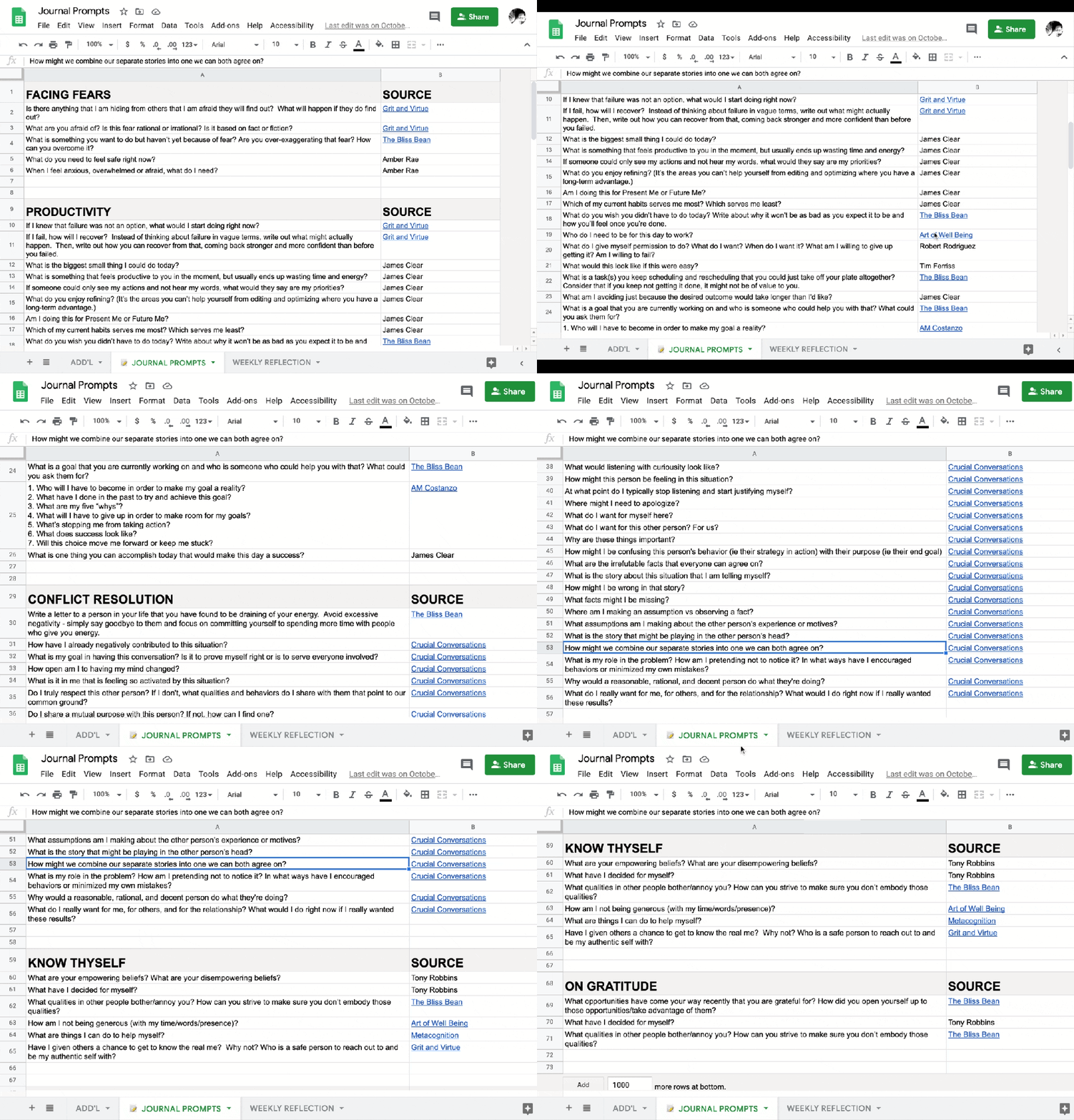
Separately, on days when I need some help and don’t know what to write, I’ve collected a library of journal questions I can ask myself. These questions serve as prompts and provide an exercise to help me understand myself better — stay tuned for a follow up post of question examples.

Sample journal prompt questions to ask myself and their sources

Over the years, I’ve built out a journal library featuring different prompts and questions based on the following categories, with the source link if I’m looking for additional examples or references.

  • Facing fears
  • Productivity
  • Conflict resolution
  • Know thyself
  • On gratitude

Even if there aren’t things that are bothering me or I need help working through an emotional situation, journaling helps me with better pattern recognition and analysis.

Analyze GIFs | Tenor

For example, as a lady, I’m subject to hormonal cycles and mood swings. Journaling became my a-ha moment when I realized that as my estrogen levels rise at the onset of my monthly period, my thoughts become increasingly negative and my mood worsens significantly.

I noticed when it became extremely apparent that the days leading up to my period, every journal post headline started with a negative emotion. And it allowed me to question for myself: is this situation truly as dire as I’m making it seem? Or is it because of my body clock?

Hungry Discovery GIF by Shark Week - Find & Share on GIPHY
My ladies know — shark week is no picnic.

In the long term, I hope to feed my journal responses into a text analyzer to help me better figure out patterns and recognition!

Weekly Reflection

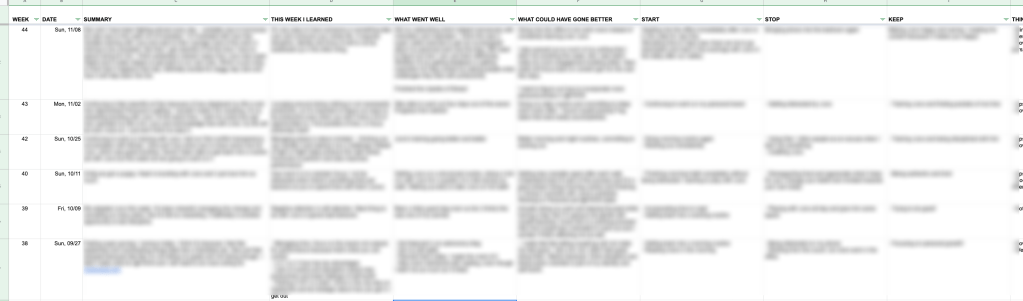
My husband and I do a weekly meeting every Sunday where we review our previous week and plan for the next. One of the agenda items on this weekly meeting (we coin it our Sunday Start), is a weekly reflection to help us iterate on what worked well, and what could be better.

In this weekly reflection screenshotted above, you can see the weekly cadence I set and the answers I give almost every week in the same structured format.
In this reflect, I perform the following exercise:

  1. Weekly summary. A lot of things happen to us, but because we forget to jot them down somewhere, we often can’t remember and are left with this feeling that we did not accomplish as much as we should have. This summary of weekly highlights helps me remember what stands out and makes it easier on my brain to recall previous memories. I like to look back on at the end of the year and remember all the milestones that took place.
  2. This week I learned. These are the lessons I learned from this week. They range from useful daily advice (never sneeze while holding hot coffee) to things I learned about myself (planning a few steps ahead always helps with fixing careless mistakes and wasting time)
  3. What went well / what could go better. This is the consistent question I always ask myself as part of any reflection I do to help me understand what I did right and should continue to do. In addition, I always want to reflect on how I can iterate and improve my weeks over time.
  4. Start / Stop / Keep. This exercise can seem a bit repetitive based on the prompt from earlier, but I like it personally but because it helps me reflect one layer deeper. I’m able to list more definitely the actionable things I should start, stop, and keep doing. In essence, the questions from section three serve as a warm-up to get my brain flowing for the more granular tasks from item four.

Journal along the path to You 2.0

As demonstrated, journaling has been a powerful tool I use in my path towards personal growth, and one I attribute a lot to internal peace of mind and better self-understanding.

For a template of how I conduct my weekly reflection, click this link for free access. It will ask for your email and send the template directly to your inbox.

Hope it’s useful on your path of productivity!

TL;DR

  • Journaling has been shown to improve self-awareness, personal boundaries, and a sense of control
  • It’s helped me personally to: figure out what’s top of mind, recognize patterns, how to prioritize and organize things, warm up my brain
  • I journal through two formats:
    • A daily brain dump
    • Weekly reflection
  • Brain dump format:
    • Thought to paper
    • Journal prompts
  • Weekly reflection:
    • Weekly summary.
    • This week I learned.
    • What went well / what could go better.
    • Start / Stop / Keep.
comment 0

Book Review and Takeaways: Guide to the Good Life

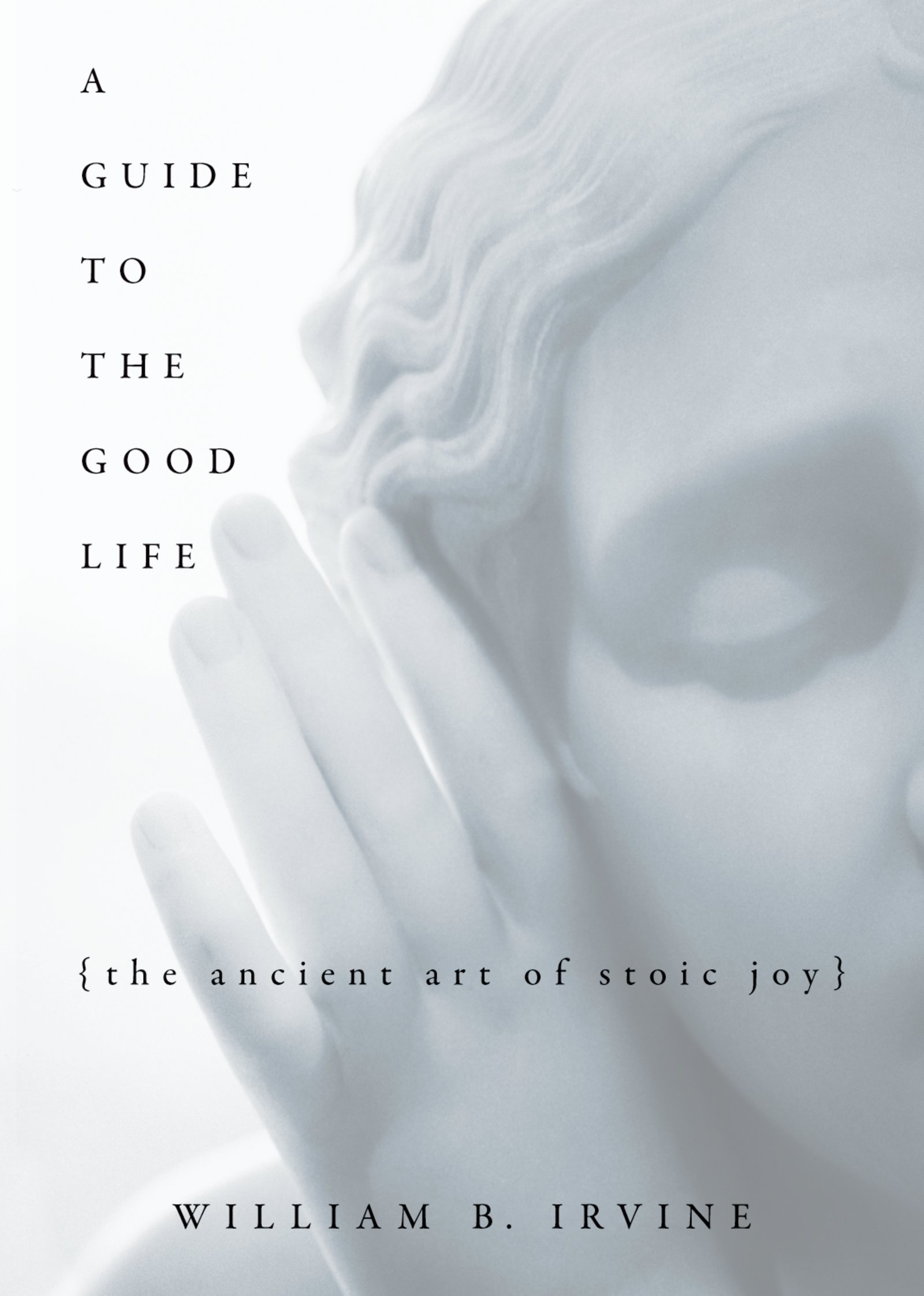
A Guide to the Good Life: The Ancient Art of Stoic Joy - Kindle edition by  Irvine, William B.. Religion & Spirituality Kindle eBooks @ Amazon.com.
A Guide to the Good Life, William B. Irvine

Synopsis

A Guide to the Good Life is just that: a practical guide on how to live a life of tranquility and contentment. William B. Irvine takes the ancient wisdom of Stoic philosophy and reinterprets it for the modern day by:

  • Sharing the history of Stoicism including its origin
  • The psychological techniques to Stoicism (did you know Stoicism has a large emphasis on psychology?!)
  • Stoic advice and thinking
  • Examples of how this can be applied to modern day

Things I Learned

Hedonic Adaptation. That which we desire will, after some time, become commonplace and will require conscious effort for us to derive the same satisfaction from it. This runs rampant in Western culture that is obsessed with consumerism — too often do we chase material possessions only to get bored of them and begin to seek our next desirable target.

The solution to this: want less.

We humans are unhappy in large part because we are insatiable; after working hard to get what we want, we routinely lose interest in the object of our desire. Rather than feeling satisfied, we feel a bit bored, and in response to this boredom, we go on to form new, even grander desires.

Negative Visualization. Negative visualization and hedonic adaptation go hand in hand. Stoics encourage practicing visualizing the loss of our desires — whether they be material or not, as a way to reverse hedonic adaptation.

This is using the psychological game of loss aversion to help us reset the hedonic treadmill so we are reminded of how grateful we are to have the things in our life.

Negative visualization is a powerful antidote to hedonic adaptation. By consciously thinking about the loss of what we have, we can regain our appreciation of it, and with this regained appreciation we can revitalize our capacity for joy.

Understanding Control. One of the biggest life lessons for me is how to manage what I can control, and what I can’t. More importantly: for the things I can’t control, the easiest way to manage well-being is to focus on the things I can control in this particular scenario.

For example: I cannot control the amount of revenue I generate in a quarter — the decision to purchase is completely up to the user.

Instead of stressing about a goal that I cannot control and causing myself unnecessary stress, a better alternative is to focus on what is within my power to change: the amount of outreach I can do.

By focusing on outreach and delivering my best performance there, this will help me perform better and most likely make my goal more attainable.

The Stoics believed that it was pointless to dwell on things outside of your control. Instead, it’s best to focus purely on things you actually can control and influence.

Other Quotes that Resonate

  • The easiest way for us to gain happiness is to learn how to want the things we already have.
  • Stoicism, understood properly, is a cure for a disease. The disease in question is the anxiety, grief, fear, and various other negative emotions that plague humans and prevent them from experiencing a joyful existence.
  • The Stoics discovered that exercising self-control has certain benefits that might not be obvious. In particular, as strange as it may seem, consciously abstaining from pleasure can itself be pleasant.

Yina’s Reflection

This is my first real introduction to Stoic philosophy and it’s like I’ve found my way home.

I’ve already been interested in applying a philosophical mindset to my outlook of life. This book helped reinforce why, like the author, Stoicism resonates more with me than spirituality like Zen Buddhism and meditation.

I like to think and reflect; and Stoicism encourages just that.

In addition, I realized I’ve been unconsciously practicing many Stoic philosophies as I try to lead a minimal life and curtail desires as well as focusing on what I can control and appreciating the things I have.

In addition, William B. Irvine’s introduces the history of Stoicism and the origination from the early Greeks. It is comforting to know that the Greeks at the time, barring gladiator fights, also exhibited similar challenges in life of unhappiness and dissatisfaction similar to us some 2,000 years later.

This makes me realize that as humans, our emotional urges and tendencies have not changed much throughout millennia. What we attribute to generational specific challenges are actually issues humankind has struggled with throughout history.

I read this book through an audio book and plan to re-read this in paper copy again going forward. Mainly because I think there are a lot of valuable life lessons that I’m aware of, but serve as useful reminders to look back on.

General Info

Title: A Guide to the Good Life
Author: William B. Irvine
Release Date: November 2008
Recommended For: Anyone interested in an introduction to Stoicism

comment 1

Journaling: A Cheaper Alternative to Therapy

Recently, a friend reached out asking for recommendations of journals for daily reflection — something she could use daily and take a few minutes to write down her thoughts.

I could not have been happier to hear this request.

I’ve tried therapy.
I’ve tried coaching.
I’ve even tried curling up into a ball and sobbing into my pillow.

Sad Andre Johnson Gif Find Share On Giphy Gur Crying GIF - LowGif
Dollar to catharsis ratio wise, the last one saved me the most money.

They’ve been helpful, for sure.

But to be honest, they paled in comparison with what journalling has done for me. I’ve found so many benefits that have helped me specifically, and are also scientifically proven to help people in general.

There are a multitude of studies that show how journaling can help everything from reduced doctor visits, depression, and memory improvement.

Journaling is the perfect combination of self-acceptance, encouragement, and problem solving. If you make a mistake, or if you do anything that makes you feel bad, journaling is how you come to accept yourself for it. It’s also where you come up with the solutions.

Thrive Global, Solve Your Toughest Problems With a Smart Journaling Routine

For me, I find that journals has helped me the most with the following:

  1. Improve self-awareness
  2. Understand boundaries
  3. Creative problem solving

Know thyself: improve your self-awareness

Journaling is a direct exercise in self-awareness — it’s a method of self-reflection. Similar to the diary you kept hidden between your mattress as a teenager, it’s a safe sanctuary to help you process your thoughts and feelings.

You Need To Feel Your Feelings Let It Out GIF - YouNeedToFeelYourFeelings  LetItOut ItsOkay - Discover & Share GIFs

As mentioned in an earlier post, if we don’t diligently reflect and process the day to day, we are less in tune with how our external environment impacts our internal needs and desires, and vice versa.

Writing things out allows you to check in with yourself, which is something we oftentimes neglect the most. We check in on friends, coworkers, family, etc. But how often do you ask yourself: How have I been impacted by the day? What positive and negative emotions have I experienced from things that happened?

Checking On You GIFs | Tenor
Don’t mind me, just checking in

The less often we check in with ourselves, the higher the likelihood that we will drift off course in our own personal direction and get swept up in other people’s priorities, which causes emotional suffering that can spin into a vicious downward spiral.

Key takeaway: By understanding how you react to your external environment, you allow yourself to better understand yourself, which is the prime definition of self-awareness:

Self-awareness and self-regulation are key to better executive function and decision-making. The bedrock is identity, self-knowledge and a sense of direction and purpose. These are the building blocks of a life that is intentional and in control of its destiny.

The Neuroscience of Self-Reflection, the Sniper Mind

No means no: establish boundaries

Improved self-awareness establishes boundaries. When you journal, you reflect on both the positive and negative emotions in your day. In this way, you are understanding the things that spark joy and the things that don’t.

There are boundaries we instinctively know that are crossed, but what about the subtler instances?In many cases it’s not easily decipherable until we come back and process the event. We receive so much signal and noise throughout the day that it is only by looking back that we begin to pinpoint the patterns of what sparks negative and positive emotions.

Eric bana GIF - Find on GIFER

By understanding this, you better understand where your boundaries lay and how to manage yourself in situations at risk.

Key Takeaway: When journaling becomes habitual, you refine your skills of observation so you can concretely define where your line in the sand is and better predict the likelihood of it being crossed.

Line In The Sand GIFs | Tenor
Draw that line in the sand loud and clear

Problem solving

Beyond recording experiences, journalling is also a valuable problem solving tool. Dedicating time and attention to thinking something through thoroughly is an opportunity we don’t normally do unless we proactively enforce it.

Sherlock GIF - Find on GIFER
Be like Sherlock. Find space to think.

A writing exercise like journaling to help you figure out a problem returns massive dividends.

Actively seeking the extra space to really think about the long term consequences (aka the second degree and third degree impact of a decision) can help you problem solve in a way that is proactive, instead of reactive.

For some of my journals, I’ve used a structured format to analyze a problem and brainstorm solutions, asking myself:

  • What’s the problem?
  • How can I resolve it?
  • What are all the possible solutions?

Journaling is like brainstorming with two people — by examining my thoughts and myself reacting to the particular problem at hand, it’s almost like I have Past Yina to help Present Yina figure out the underlying cause of the problem, identify solutions, and help Future Yina assess possible scenarios of a single decision.

Clone GIFs | Tenor

Key Takeaway: Journaling is a valuable way to problem solve. It gives you the mental space and focused thinking to help you figure out a solution, or at the very least, the next step forward. Take the time to brain dump problems by identifying the problem, potential resolutions, and examining different alternatives.

Calculating GIF by memecandy - Find & Share on GIPHY
In finance, we call this scenario analysis

TL;DR

  • Research has shown there are many benefits of journaling for mental health
  • For me, I use journalling primarily to help:
    • Improve self awareness
    • Understand my boundaries
    • Problem solve
comment 0

Getting Fooled: How to Make Hard Things Easier.

I decided on a whim one day that I would start writing and sharing down my thoughts.

I’ve owned this domain (yinahuang.com) for years — kind of as a failsafe to stake my identity on the world wide web. But it’s been untouched, defunct and gathering dust since its very first day of existence.

Dust Off GIFs | Tenor

What a sad and dishonorable thing to do.
What a waste.

I’m not sure when or why — maybe it was hedonic adaptation to “level up my sharing” off of social media. Or as a productive escape from setbacks in my startup. Or maybe I realized I needed to hone my clarity of thinking.

Whatever it was, I woke up that day and just started to write.

Getting fooled

The hardest part is starting, they said. That wasn’t the case for me.

The first post was easy. The words came spilling out faster than I was ready to capture them on paper — the paragraphs well-formed, the idea cohesive. I wrote and published my first post the same day I decided to start.

I felt quite proud of myself.

Dust Off GIFs | Tenor

Based on the low effort required for my first post, my heart leapt — if this feels so easy, I should be able to keep this up. No problem.

False.
Each subsequent attempt took every mental ounce of strength to string the words together.

What I didn’t realize was that my first post had been sitting with me for quite some time. Digested and subconsciously refined over the course of several months, no wonder it took little to no effort to write. It had already been mostly written in my head.

Trying to create something out of nothing however, especially a half-baked concept, felt like taming a wild beast.

8 'Jurassic World' Spoilers For People Who Are Too Afraid To Walk With The  Dinosaurs | Jurassic world movie, Jurassic world raptors, Jurassic world  trailer
Down boy, down.

I’d have to wrangle it down and wrestle it into submission, to get the idea to make sense in my head before even attempting to write it down. I’d meet my internal deadline for writing that’s true, but always finished feeling depleted, like I ran a marathon or gave birth.

It felt exhausting.

George michael bluth GIF on GIFER - by Analanim

Recognizing the problem

Diving into problem solving mode, the first things that came to mind was asking myself how can I simplify the creative process:

How can I make this simpler?
Is there a way to systemize the creative process?
How do I optimize this?

Unfortunately, what I learned in my online research and asking for help, was one key takeaway: This is what creation is all about.

We all often feel like we are pulling teeth, even those writers whose prose ends up being the most natural and fluid. The right words and sentences just do not come pouring out like ticker tape most of the time.

Shitty First Drafts, Anne Lamott

I was lucky with my first post; like a Blue Apron meal kit, my words had come pre-assembled and measured out with the recipe already provided. I just needed to put it together.

But if I am to continue writing as a consistent creative process, I’m not afforded the luxury of spending months ahead of time assembling my meal kit.

Grandfathered GIF - Find discovered by You Must Love Me!

So the first step in solving this problem: accepting that creativity will be an inherently painful process.

Life Is Pain GIFs - Get the best GIF on GIPHY


It’s much easier to consume. But creating consistently requires constant, effortful, progress.

Accepting that, I think, is partly what I needed. But the second part, was an extension of a previous post: optimization. In other words, to turn this into a routine.

The solution

In theory, I already know the solution. I’ve even written about it before. I just never thought to apply it to my writing context.

The key solution then — is just to simply write.

It doesn’t need to be perfect.
It doesn’t even need to be good.
It just needs to be done.

Do it daily in some shape or form, so that it becomes natural to transfer thought to paper. And then work on refining it.

Ghost Comics Done Is Better Than Perfect By Marcos Animated Stickers Line -  CloudyGif

You might not write well every day, but you can always edit a bad page. You can’t edit a blank page.

Jodi Picoult, Interview with Noah Charney

Dedicate time to writing each day, or a specific day, however you want to organize it. But ensure it becomes so routine it becomes habitual.

Creativity through Routine

Creating a routine of writing allows for a few things:

  • Separate your writing brain from your editing brain. My theory is that my mental fatigue is caused from context switching between these two modes of thinking.
  • Systemize with drafts. Drafts are a system. Prioritize getting thoughts down on paper first. Iterating and refining versions make it easier instead of doing it all in one go.
  • Transform writing into a habit. Consistency builds value. Figure out a good cue, response, and reward for writing. It will compound over time. 

I do believe creativity can be systematic as well, and surprisingly, after more consideration not complex. Essentially, creativity can be systemised in two steps:

  1. Create.
  2. Edit.
  3. Revise.
  4. Repeat. Aka: iterate.

We create first by writing everything down on paper followed rounds of edits and adjustments. This reduces the mental fatigue when creating. Because creating and refining require two different aspects of your brain, it’s important to allow one type of thinking to flow instead of being hijacked by the other.

22 Tell-Tale Signs Of White Wine Hangover | Neurons, Brain gif, Brain

This is a skill that requires discipline to cultivate, but I’m realizing that by forcing myself to stay in this creative flow state of thinking, I’m able to significantly reduce mental fatigue by “batching my work” — in other words, by creating first, and editing later.

Optimization through habit

Consistency compounds into value. I am constantly reminded by how necessary it is build good habits. In this case, the best habit I can build to make this process easier is to make a habit of writing consistently.

It will never get easier, I’ve learned. But it will get better.

This post is perhaps more of a reminder for me than you, but I hope it’s useful nonetheless.

This post is dedicated to Angela Goodhart. Thank you for your words of encouragement and additional reading to make me feel less alone in this process ❤️

TL;DR

  • Creating is an inherently painful process
  • Top line solution: Make writing so routine it becomes habitual
  • Consistent writing offers three main benefits:
    • Separating writing brain versus editing brain to reduce mental fatigue
    • Systemize with drafts to iterate
    • Transform writing into a habit
comment 0

How to Say ‘No’ Kindly: the Formula

As mentioned in an earlier post, one of the best ways to focus on your own goals and for your own peace of mind is to leverage the word ‘No.’

More often than not we say ‘yes’ to too many things — and eventually these small, lackluster things fill our days. All too soon, before we know it our days become years and we wonder where the time has gone, and what happened to all the meaningful things we had planned in our lifetime.

Wasting Time GIFs | Tenor

The word ‘No’ comes up in many situations — whether it’s to push back on scope creep, establish boundaries, manage expectations, decline a request, etc.

However, an abrupt ‘No’ can often times damage relationships. If protecting this relationship is important, how you deliver the ‘No’ is crucial.

absolutely not gifs | WiffleGif
Unless you are Joseph Gordon-Levitt and have just asked me to marry you, the answer is no.

Rejecting someone takes significant mental energy. Because it goes against our ‘yes’ nature and against our primal desire to please, how do you deliver ‘no’ in a way that feels like you honored the relationship without it depleting your mental reserves?

Beat the Block: 16 Tips to Overcome Writer's Block – Tauri Cox
Worst kind of writer’s block is how to refuse someone

One of the best system I’ve found that works has been by crafting a ‘no’ that is systemized. I have a ‘no’ formula, which means there are certain components that I want to include in my response. By creating this framework, I’m able to craft refusals speedily without worrying about hurting relationships and in a more efficient way without feeling like it drains my reserves.

Instead of having to wrestle the ‘no’ from the bottom of my soul and agonize over the words every time, I can put in the time and effort into create a ‘no’ that establishes boundaries but most importantly, is kind.

Be Kind GIF | Gfycat

Making your ‘No’ formulaic.

disneypixars | Tumblr

A well crafted refusal has five key components:

  1. Acknowledge and appreciate the request.
  2. Decline the request.
  3. Include a positive statement.
  4. Offer an alternative or referral.
  5. Allow for future ‘yes-es’.

1. Acknowledge and appreciate.

Make sure to acknowledge the initial request and thank them for the opportunity or the outreach. It’s important to show appreciation and recognize that this person spent the effort to reach out to you and propose something.

Funny Dog Thank You GIFs | Tenor

Acknowledging their intention is a way of making the other person feel heard.

  • Thank you for the email!
  • So good to hear from you, thanks for reaching out.
  • I really appreciate you thinking of me.

2. Decline the request.

A solid and firm ‘no’ is important to remove any ambiguity or room for negotiation. The ‘no’ needs to be clear enough and emphasize your priorities. There’s no need to make this long winded, but it needs to be clear and assertive.

Looking Around GIFs - Get the best GIF on GIPHY
Avoid having the other person feel like this after your vague response.
  • I wish I could say ‘yes’, but I’m not available at the moment.
  • As much as I’d love to be involved, I’m currently focusing on [XYZ].
  • Right now is not a good time.

3. Include a positive statement.

This is an exercise of putting yourself in their perspective.

If you think about it from the perspective of the other person, it’s important to understand that whatever is being proposed is something that has meaning to the requester, and should be honored as such.

Sounds Fun GIFs | Tenor

Acknowledging the request itself is another way to form a further connection with the requester.

Even if the request itself is not a good fit, it is still an opportunity to strengthen a relationship in some shape or form.

  • This seems like a wonderful opportunity.
  • What an exciting project!
  • [XYZ] sounds lovely.

4. Offer an alternative or referral.

One of the best ways to maintain a relationship is to offer help or value in some way even if you are unable to fulfill the original request. This can come in the form of a counter proposal, or potentially a referral.

Double your salary
  • This falls out of my wheelhouse, but I’d love to collaborate on [Project XYZ]. Are you open for a follow up discussion?
  • While this isn’t the best fit, I know [Person XYZ] would be a great fit. I’d be happy to send an introduction if you’re interested.
  • Right now is not the best time for me, but I’d love to chat in six months once [Project XYZ] is finished.

5. Allow for future ‘yes-es’.

Some of the best ‘No’s’ I’ve seen are not ‘No’, they are a ‘not right now.’ By leaving the door open for future opportunities, you effectively pave the way for the relationship to develop in the future and your refusal will not feel like a full blown rejection.

Peeking In Episode 8 GIF - Find & Share on GIPHY
Leave the door open for future opportunities
  • I’d love to keep in touch for future opportunities.
  • Let’s circle back in a few months once I have more bandwidth.
  • I’ve added you to LinkedIn, please don’t hesitate to reach out further if I can help in any way.

It pays to be kind.

It’s a small world.

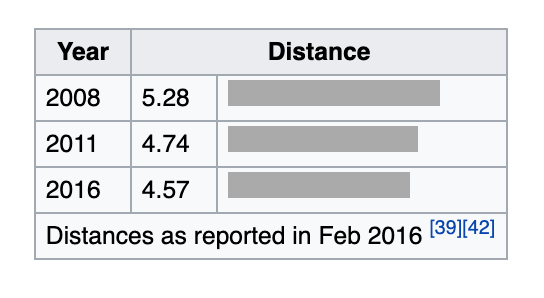
As the world becomes more connected, it also becomes smaller. This image below shows the shrinking degree of separation the average person has to be connected with every other person on the planet.

Opportunities are forged through strong relationships, which are developed through clear communication, mutual respect, and transparency.

It’s important to say ‘no’ as often as possible while you prioritize your focus, but it doesn’t mean that the ‘no’ cannot be kind.

Vh1Beautybar Be Nice GIF by VH1 - Find & Share on GIPHY

I’ll be honest: having a system for saying ‘no’ does not mean a refusal is perfected. This formula and template will not provide a guaranteed positive relationship afterward. A good refusal should be as personalized as much as possible.

What I can promise however, is that this can help expedite the communication process by providing a foundation of what a good ‘no’ looks like.

TL;DR

  • Make it easier on yourself while still offering respect to the other person but creating a more formulaic ‘No’
  • A good ‘No’ has five key parts:
    1. Acknowledge and appreciate the request
    2. Decline the request
    3. Include a positive statement
    4. Offer an alternative or referral
    5. Allow for future ‘yes-es’

comment 0

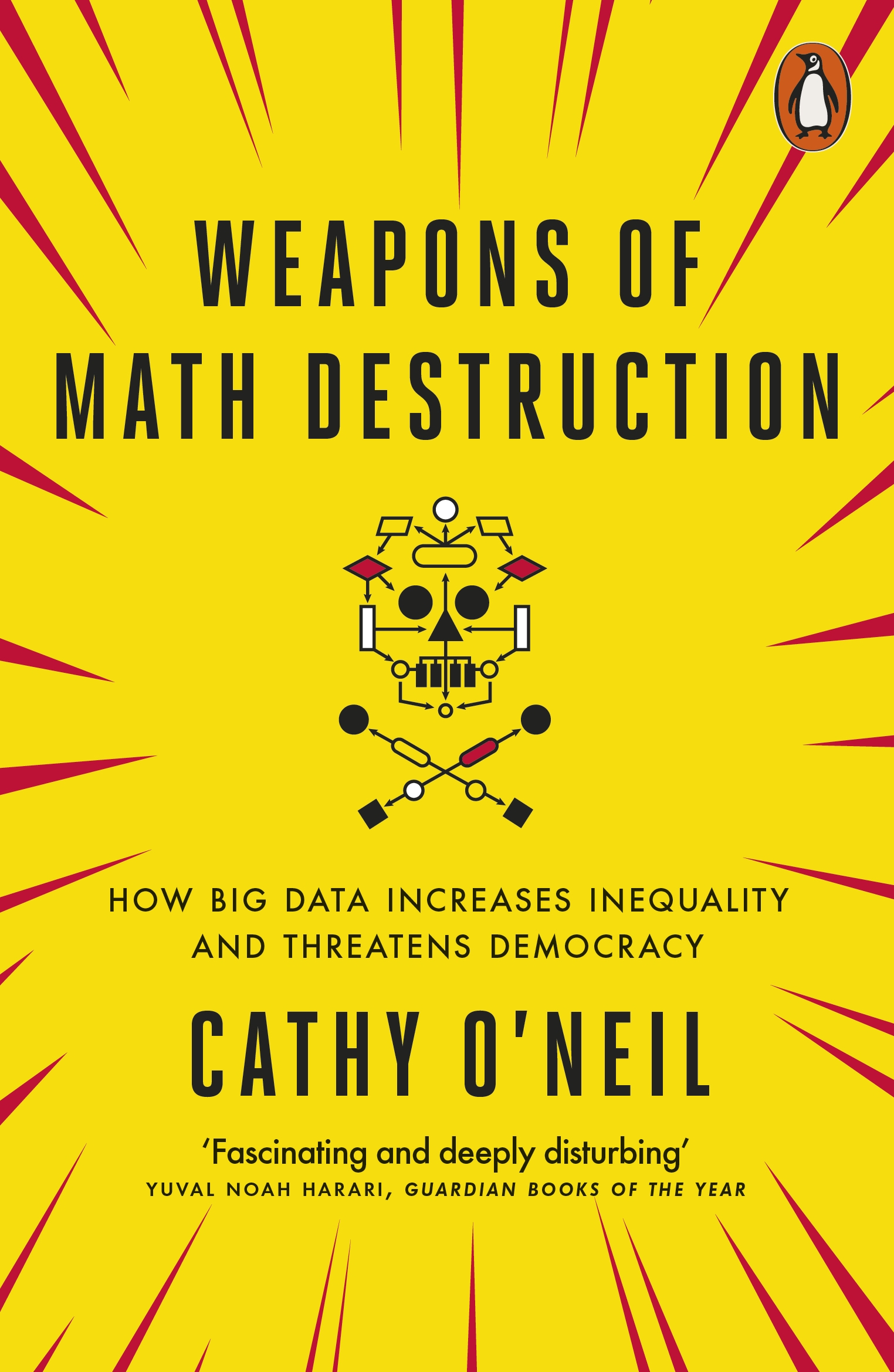
Book Notes and Takeaways: Weapons of Math Destruction

Synopsis:

In Weapons of Math Destruction, the author walks us through her own career in big data — first at Harvard and Columbia, then as a hedge fund quant at D.E. Shaw. She explains how she came to be disillusioned by the space after seeing how data models were part of the catalyst to the 2008 financial crisis.

Cathy O’Neil demonstrates real world examples of the ethical and moral dilemmas algorithms create for society’s marginalized and underserved communities. She shows how privilege protects certain groups of people and reinforces inequality, while the vulnerable continue to be penalized by these machines in a pernicious negative feedback loop.

Key Takeaways:

  • Dangerous data models are classified by Cathy O’Neil as Weapons of Math Destruction (WMDs)
  • WMDs exhibit the following characteristics:
    • Scale. They process large volumes of people without human oversight.
    • Non-iterative. Dangerous data models lack a feedback loop to correct and update the model over time.
    • Biased. WMDs use various proxies to account for the predicted outcome, which needs more precision and can be discriminatory.
    • Transparency. Data models are opaque and not transparent to the people they are profiling.
  • WMDs profile individuals (and institutions) based on specific variables which can determine large milestone life events like college rankings, employment application screeners, policing and sentencing algorithms, workplace wellness programs, and the many inappropriate ways credit scores reward the rich and punish the poor.
    • Example: “In Florida, adults with clean driving records and poor credit scores paid an average of $1,552 more than the same drivers with excellent credit and a drunk driving conviction.”

Memorable Quotes:

  • The result is that we criminalize poverty, believing all the while that our tools are not only scientific but fair
  • We’ve seen time and again that mathematical models can sift through data to locate people who are likely to face great challenges, whether from crime, poverty, or education. It’s up to society whether to use that intelligence to reject and punish them—or to reach out to them with the resources they need.
  • The math-powered applications powering the data economy were based on choices made by fallible human beings. Some of these choices were no doubt made with the best intentions. Nevertheless, many of these models encoded human prejudice, misunderstanding, and bias into the software systems that increasingly managed our lives. Like gods, these mathematical models were opaque, their workings invisible to all but the highest priests in their domains: mathematicians and computer scientist. Their verdicts, even when wrong or harmful, are beyond dispute or appeal. They tended to punish the poor and the oppressed in our society, while making the rich richer.

Yina’s Review:

Cathy O’Neil’s writing felt oversimplified given the subject matter at hand. I don’t disagree with her examples of bad data models, but I was disappointed that she did not elaborate further on the examples. Her writing felt very unfinished, lacking focus and clarity.

With her work experience, I expected something that read more in depth and pulled from better sources (example sources: NYTimes, The Guardian, Washington Post, etc.)

It reads oddly trite for such a fascinating subject matter. There were many interesting examples, none of which were looked at in great depth — it read more like a laundry list of issues with blanket high level solutions that were not actionable.

Perhaps Cathy O’Neil was targeting the general audience and I was looking for a deeper dive.

TL;DR: Good book for an introduction into the world of data and shares a strong stance on fallacies behind data models with examples to go with it. It did not fit my needs for more granular substance, unfortunately. But a good introductory book nonetheless for anyone interested in big data and data science.

Hope this review was helpful! You can check out what I’m reading on GoodReads.