comment 0

How Reflection Helps: 3 Science Proven Benefits

Life moves astonishingly fast, especially in this day and age.

Thanks to Moore’s law, technology is advancing at an exponential rate, which means that our lives and pace of life moves just as rapidly as a secondary consequence.

How I feel about life these days

Because of this, more often than not we pass our days without spending the time to “process” our experiences.

What I’m referencing, in a nutshell, is reflection.

By three methods we may learn wisdom:

First, by reflection, which is noblest;
Second, by imitation, which is easiest;
and Third, by experience, which is the bitterest.

Confucius

As a follow up from my Quarterly Review post, aside from tracking my goals, another facet that’s helped me maintain progress has been an emphasis on reflection.

Reflection is intentional thought — a conscious consideration and analysis of our past experiences.

Pondering GIFs - Get the best GIF on GIPHY

It allows us to pause amidst the relentless pace of life, to question what we do and why we are doing it. It gives our brain a moment to help better understand things in the context of our values and beliefs, to give meaning to our experiences.

We learn by doing this much is true, but we can accelerate this learning if we synthesize, abstract, and articulate the key lessons taught through our experiences.

Reflection fuels personal growth — we cannot grow from our experiences, both bad and good, if we do not make an effort to understand them and adjust as we learn.

In startup lingo, this refers to iteration: constantly assessing and refining what we do to help us achieve better results.

How does reflection benefit me?

Reflection is useful, however, it’s not easy. But once we understand how to reflect, we realize there are many benefits:

  • Enhances productivity
  • Improves happiness
  • Deepens learning

Enhances productivity

We already intuitively iterate on our work. It’s the nature of a feedback system; we continue to do what works and discard that which doesn’t. By reflecting more consciously, we become more aware of the small nuances in the work we do and can continue to tweak and refine work flows.

This is a pattern of working smarter, not harder which translates directly into productivity.
Productive GIFs | Tenor

In research conducted by Harvard Business School, Francesca Gino and Gary Pisano discovered that there were significant benefits in reflecting: their research revealed that employees who spent 15 minutes at the end of the day reflecting about their work day and lessons learned were 23% more productive over a 10 day period on average than their peers who did not reflect.

Now more than ever we seem to be living lives where we’re busy and overworked, and our research shows that if we’d take some time out for reflection, we might be better off.

Francesca Gino

Reflecting has the additional benefit of reducing anxiety in the event things go wrong. By reflecting and thinking about what can go better in the future, you are helping yourself prepare better for future setbacks.

Even a modest scenario analysis can help you mentally assess how to react in the event of an emergency, which is another way to boost productivity when things take a wrong turn.
emergency alert gifs | WiffleGif

Improves happiness

Part of what defines happiness in our life is our quest for control. It’s been shown that reflection helps us our happiness because it helps with our own self-awareness. By reflecting, we build a better understanding of ourselves, and how we fit into the world alongside our values and beliefs.

This is not theoretical; research backed data shows proven results that reflecting increases happiness, heightens productivity and reduces feelings of burnout in a study of UK commuters that reflected on their way to work.

25 Excitement GIFs to Perfectly Express Your Joy
Who needs anti-depressants when you can reflect

Reflection helps change your mindset and improve self-esteem. By thinking back on your experiences, it helps you process your thoughts and feelings.

Self-analysis promotes an active sense of self — instead of looking at things from a victim mentality and how your surroundings and circumstances affected the outcome, you are focusing on the things you can control. That is, the behaviors and actions you can take to help you improve the next time around. This prevents the feeling of helplessness and being bulldozed by life.

Bulldozer GIFs - Get the best GIF on GIPHY

For me personally, self-reflection helps me understand why I may have reacted in certain situations, recognize my own biases, and helps me tackle problems by focusing on what I can do better next time instead of feeling like there’s nothing I could have done.

This feedback helps us feel more in control, more confident and essentially translates into belief and understanding your ability to execute on achieving certain goals.

Understanding that we have the power ourselves to improve results also gives us something to look forward to, something we can do better on in the future, particularly if we were reflecting on a negative experience.

Deepens learning

Cognitively, reflection helps us better understand the work we’re doing. By reflecting on how we performed, what went well and what didn’t go well, we can refine our understanding of how we accomplished something.

A study of students in STEM fields showed that self-reflection lead to a 22% increase in improvements to academic performance.
Learning GIFs | Tenor

This is because by reflecting, you are relearning and deepening the neural circuits of the task at hand to make it become more automatic. As you reflect, you are actively revisiting the earlier experience, which further develops the neural pathways and helps make the task easier over time.

By following this process, you are able to improve your critical thinking skills to help you problem solve future roadblocks in similar instances.

How to Reflect?

When it comes to reflection, there are many ways to conduct an exercise in self-reflection. It can be in the form of a project post-mort or retro, or even something as simple as jotting down notes in a journal or text document for personal experiences.

The key thing however, is to ask yourself questions. If you don’t know where to start, two questions I always like to ask myself, in any situation, are the following:

  • What went well?
  • What could have gone better?

Asking these two questions allows me to

  1. Assess what I did that worked, reminding my brain to continue doing things that worked, and
  2. Asking myself to think critically about what I could have done to improve, or iterate, the next time around.

Another format I like to employ when I have the time, is a more detailed flow that asks you a few key questions as well:
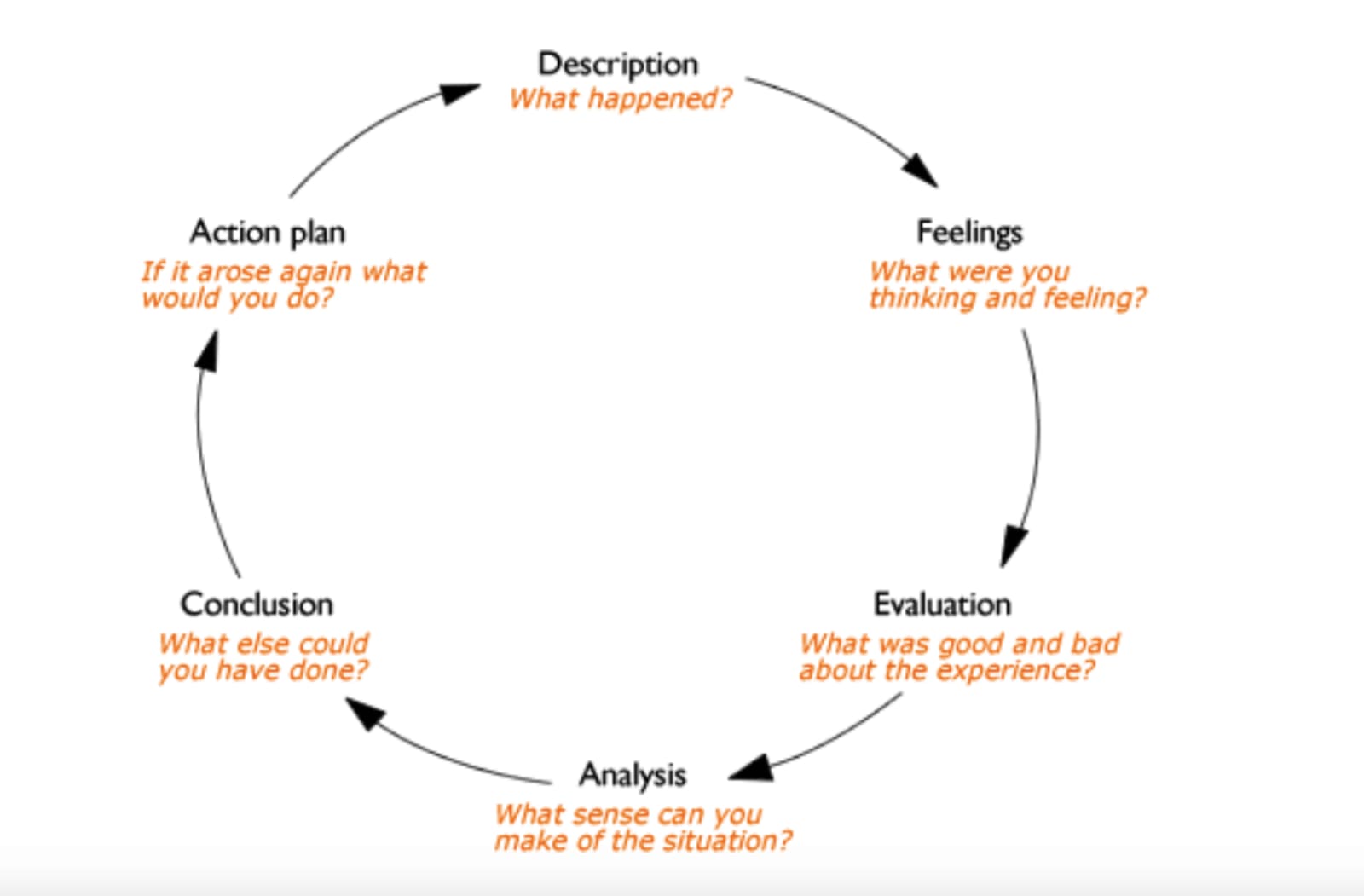
Source: Oxford Brookes University

Taking the time to ask yourself these questions and actively thinking on the experience is one of the most effective ways to helps minimize mistakes going forward that need to be repeatedly taught through experience.

Use reflection to help yourself

Reflection is a crucial to our human experience — it’s one of the cognitive functions that separates us from other living beings.

This understanding of self fuels our personal growth and development; it’s what helps us be more productive by assessing what we can improve on, improves our well-being by giving us a sense of control, and improve our understanding through critical thinking.

We build up understanding through our experience in the world. But until we actively reflect — to understand and explain not just what we do, but why we did it, this understanding remains only an assumption, an “intuitive” feeling that cannot be replicated for future iterations.

It serves as one more tool in your productivity toolbox to help you live a better and more meaningful life. Hope you wield it well.

We do not learn from experience…we learn from reflecting on experience.

John Dewey

Until next time,
Be well, stay productive.

TL;DR

  • Reflection helps us give meaning to our experiences and provides many benefits:
    • Enhanced productivity
    • Improved happiness
    • Deepened learning
  • Reflect by asking yourself questions
    • What went well?
    • What could have gone better?
comments 2

My Quarter in Review: Q2 2020

Data is fascinating.

Maybe it’s because of my old field of work in finance, or my love of STEM fields. I’m not sure really, but I’ve always appreciated what data can do for you. I love how it informs you, and how it is honest.

I love its objectivity.

In my past life, I used to work extensively with hedge funds to analyze data of their portfolio companies in order to assess performance. This meant looking at earnings reports, performance, price changes over time, etc.

Looking at a company’s balance sheet and analyzing its financial data is one of the fastest ways to reach a binary answer to the question: how is this company performing?

Sales GIFs - Get the best GIF on GIPHY

Be the CEO of You, Incorporated

In the past few years, I’ve started experimenting with an idea inspired by quarterly earnings reports of companies.

Every quarter, public companies report on their performance through standardized metrics compiling sales and revenue data, as well as expenses and growth to provide a high level snapshot of the company performed against their goals.

I’ve started created mini Quarterly Reports to track my goal performance over time. I’ve found that using data to my advantage and measuring myself like a business has helped keep me accountable towards my goals and a cadence I’ve set for myself.

What Data can Do for You

Over the past few years, I’ve consistently been collecting data to better understand myself, behavior, and performance.

It took me a while to realize that we all carry a personal narrative in our heads — our own story and perception of our life experiences. It’s the method our brain uses to understand the world around us and how it applies to us. Where it falls flat however, is when we believe our personal narratives to be the objective truth.

Armed with this understanding, this is why my data-tracking has been useful to me: to help me process the subjectivity of my own experiences.

In other words, it’s manual and tedious AF, but it forces me to be honest with myself, and helps me improve myself by making better choices. Instead of assumptions based on intuition and guesswork, data allows you to make informed decisions.

IHave The Data Yang Data GIF - IHaveTheData Data YangData - Discover &  Share GIFs
Data is powerful. Use it to your advantage.

Setting the right goals

The first step is to begin establishing goals (I plan to have a follow up post on how to set valuable goals, so stay tuned). But in the meantime, the key item I want to highlight is creating action-based goals. This means setting goals you have definitive control over.

For example, instead of a goal of reading 10 books in a quarter, I chose an action-based goal of reading 300 minutes a week. These are all goals allowing myself full control of the situation. I can make a decision during the week about consciously taking these actions.

My weekly goals in summary:

  • 📝 Write: Write 1 article
  • 📚 Read: Read for 300 minutes
  • 🌱 &E Conversation: Have 2 conversations with strangers to practice pitching my startup
  • 🤓 Learn: Study 2 lessons in a course
  • 👭 Connect: Catch up or connect with two different friends
  • 🐸 Productive: Complete my most important task of the day
  • 🥬 Food Grade Average: Choose healthy meal options (that have a food grave higher than 4)
  • 🔥 Calorie Burn Average: Burn 2,300 calories a day (tracked via Apple Watch)
My goals for 2020 Q2

Setting a goal of 10 books is a fine and measurable goal, but the question is — does this represent a goal you have full control over?

I used to set a goal of reading XX books a year, but found myself always coming short. Books vary in terms of page length, spacing, density of material, etc. This impacts your speed of reading and how quickly you can finish a book.

In addition, I started noticing that when the year was coming to a close and I was behind on my goal, I felt the urge to “cheat” so to speak, and pick shorter books just for the sake of saying I finished reading a book.

But how much value does that provide?
When I used to create results driven goals, I’d create external pressure to hit this goal at all costs, which inevitably turns into cheating and “massaging of rigor.” Forcing myself to cut corners in order to reach this goal didn’t help my long term purpose: learn and build my knowledge.

Find goals that motivate you — you’ll be less tempted to take the easy route and cut corners.

Key takeaway: Select actionable goals that you can definitively measure.

2020 Q2 in Review

The image below shows the weekly results of my goals over time. I’ve established the weekly cadence I have for each goal, and every week I would log the frequency or time I spent working on this goal.

I’ve used conditional formatting to highlight missed goals for the week in red.

Weekly tracking of goals over time.

As you can see, there’s a shit ton of red.

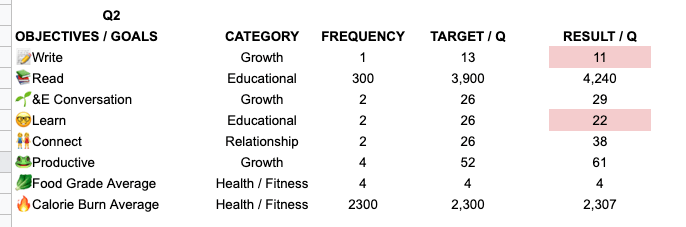
But interestingly enough — when you take the cumulative results of all thirteen weeks in the quarter, you’ll see something interesting in the table below: I hit almost all the goals I set for myself.

And for the ones I didn’t, I was pretty damn close.

Q2 2020 Summary

This screenshot is my Q2 2020 Summary — a cumulative sum of the frequency I needed to accomplish for each goal throughout the quarter. This was done simply by multiplying my weekly goal by the number of goals in the quarter.

Similarly, anything in red implies missed goals.

When I first started doing this, I remember feeling so discouraged seeing all that red. It wasn’t until I did my quarterly reflection to review my results and my performance, that I saw how many goals I had actually hit.

These action based goals also translated directly into results:

  • I saw my @yinadreamsofspace IG following grow by 700+ users
  • I finished 6 books in a single quarter
  • I completed four courses
  • I dropped 6 lbs from eating healthy

You get the idea.

By tracking my results, this removed the ambiguity of only thinking I was putting in the work on my goals, and helped me hold myself accountable.

In addition, working in this way allows me to replenish my motivation even on days I’ve missed the goal, because I know I do have time to play catch up.

Cheetah Chase GIFs | Tenor
Cheetah: Me
Antelope: Goal deadline

Based on this data, I’m confident I have room to “level up” my goals for next quarter and see how this adds momentum to my progress.

Help yourself help yourself

I’m not necessarily recommending my system since I know it might not work for everybody, but one thing is fact: logging and tracking data helps keep yourself honest and hold yourself accountable.

This behavior naturally makes you more inclined to commit time and energy to the work you’re tracking, which inherently means progress. More progress leads to increased motivation, which leads to more time and effort spent, and thus creates a positive feedback loop.

TL;DR

  • Data is valuable. It’s objectively allows us to make more informed decisions.
  • If you are looking for an objective, more scientific way to approach your goals, start by measuring your data.
  • Building out a weekly cadence allows you to track goal progress over time, while allowing for flexibility so you can compensate for missed time from other weeks.
comments 4

The Power of No.

A subtle yet cataclysmic shift in my personal development happened when I learned a valuable word.

Michael Scott from the Office yelling No
Caption: Michael Scott says it more eloquently than I ever could.

No.

A lot of who I am now is attributed to the ripple effect from using the word ‘no ‘ more often. Small, but powerful, the word ‘No’ carries a lot of weight to it — in terms of my own life trajectory, things began to change for the better when I started to say ‘no’ more.

To myself and my own impulses.
To work that did not excite me.
To obligations that came at the expense of my own needs.

“The art of leadership is saying no, not saying yes.
It is very easy to say yes.”

Tony Blair

To begin using ‘no’ as a tool, we first must understand the following:

  • Why human nature makes it so hard to say ‘no’
  • What saying ‘no’ does for you
  • How to say ‘no’ better

Read further for more information.


Easier said than done.

Saying ‘no’ is extremely hard. I 100% feel you. The ‘no’ muscle is not something we as humans have naturally built up. We evolved from a land of scarcity — our chimp brain is programmed to want to say ‘yes’ more often than no.

Early farmers and hunter-gatherers in Europe got along together pretty  well, new study says - Cantech Letter
Our brains did not evolve as fast as our environment did as we moved from resource poor to resource rich.

On the savannah, saying ‘yes’ to every opportunity was the best tactic for survival — it helped our own agenda to consume as many resources as possible. Survival of the fittest meant that whoever had the most resources had the greatest changes to survive.

Evolution, as it seems, encourages us to be greedy.

But what was accurate then is no longer accurate now.

We used to live in a world in which we didn’t need an inner no, because no was all around us. Now we live in a world designed to give us what we think we want. Now yes is all around us.

William Leith, The Guardian

Fast forward to present day, we no longer live in a world of scarcity. Resources are abundant. Saying ‘yes’ is now no longer what can amplify survival.

The answer has changed to saying ‘no.’

In addition, saying ‘Yes’ is automatic, it’s inherent in our desire to please people. We live in a society where saying yes is always encouraged and appreciated. This is also linked to our primal brain, which associates ‘agreeableness’ with herd survival.

Surviving Cliques - SOS Safety Magazine
Thank your primal brain: why cliques (and Mean Girls) exists

The fear of conflict is instinctual, it drives us to avoid rejection both in the form of giving or receiving it. In addition, for requests from people close to us, we say ‘yes’ because we care. We want this person to be happy.

We have an instinctive need for connection to other people—it’s essential to our survival. We worry that saying no will break these bonds.

Vanessa Bohns, Ph.D., a professor of organizational behavior at Cornell University

Life will get a lot easier to manage when you realize that in this age of plenty, saying ‘no’ will actually help you get more of what you’re looking for.

Why saying ‘No’ is empowering

1. Represents a choice.

As mentioned earlier, it’s inherently programmed into our primal brains to say ‘yes’ more often. That was the best way for us to acquire as many resources as possible. Yes is easy, yes is automatic.

But how often have you felt that pang of regret for overcommitting or saying yes to something that, in hindsight, you wish you had said no instead?

The more difficult response is really no. It’s harder because ‘no’ represents a clear choice, and not an impulse decision. It acknowledges that you know what you want. And what you don’t.

You are your choices. They define the life you want to live. And it’s only by recognizing and setting boundaries that you can make better choices on the life you want to live.

Dean, Sam, Supernatural, I Trust You, Make Good Choices GIF | Gfycat

Most importantly, it will give your “yes-es” more power. By knowing what to say ‘no’ to, you are able to prioritize what is in your yes column. As Derek Sivers wisely says:

If you’re not saying “HELL YEAH!” about something, say “no”.

When deciding whether to do something, if you feel anything less than “Wow! That would be amazing! Absolutely! Hell yeah!” — then say “no.”

When you say no to most things, you leave room in your life to really throw yourself completely into that rare thing that makes you say “HELL YEAH!”

Every event you get invited to. Every request to start a new project. If you’re not saying “HELL YEAH!” about it, say “no.”

We’re all busy. We’ve all taken on too much. Saying yes to less is the way out.

Derek Sivers

Key Takeaway: Know what you want. Choose it. Say no to the rest.

2. Demonstrates discipline, strength, and courage.

In a world that is constantly trying to entice you into saying ‘yes’ — to that cake, that night out, that extra project, it takes mental strength and discipline to avoid the easy ‘yes’ and have the bravery to fight intuitive responses and say ‘no’.

Note to self: be more like this kid.

Discipline is choosing what you want most most over what you want now. In short, it’s an exercise in long term thinking. It shows you have the backbone to prioritize your time and needs — that you are committed to a goal that’s important to you.

Enforcing discipline with yourself means you’ve been able to successfully ask (and answer the question): does doing this help me towards my long term purpose?

As a choice, saying ‘no’ is also a way to improve your self-worth. It reinforces the identity you’ve created for yourself, that ‘you are someone that resists the easy indulgences.’ Self-discipline is having the strength to say no. By saying ‘no’ to our own self-destructive impulses, we generate self-discipline — which over time translates into self-worth.

Daring to set boundaries is about having the courage to love ourselves, even when we risk disappointing others.

Dr. Brené Brown, Dare to Lead

Key takeaway: Build your discipline and courage. Have the strength to say no.

3. Offers protection.

It’s human nature to focus on the self. And that’s what of happens when people make requests: they are thinking of their needs and how you might be able to assist; most people are not thinking from your perspective or focused on your needs.

No one is at fault in this situation, but this is exactly why you must be fully aware of your needs. You must be your largest advocate, your most enthusiastic agent that seeks out the best auditions for you, and ignores the rest.

‘No’ insulates yourself from other people’s needs. It protects what is precious to you and allows you to consider your needs first, before considering others.

Boundaries GIFs - Get the best GIF on GIPHY

That’s the ‘nice’ way of saying selfish, ICYMI.

Your no protects your personal power in your relationships. It enables you to be more honest with other people, yourself, and what you want. Your no allows you to say yes to things that are important to you.

Tiny Buddha

Key takeaway: Protect your time and mental energy . Say no.

How to say ‘No’ in a better way: Six strategies

It’s not just about the ‘no’ itself, it’s also how you say it. Here are a couple of tactics for how to say ‘no’ better:

  • Give yourself space to think. If you feel yourself having the knee-jerk reaction to saying ‘yes’, that’s a great sign that you need space to think it through.
  • Manage tone and delivery. Acknowledge and respect the request before providing a response.
  • Leaving feelings out of it. Separate the decision from the relationship to prevent yourself from feeling guilt, or further compromising the relationship.
  • It’s not ‘I can’t’ — It’s ‘I don’t’. Retain your feeling of control by emphasizing that this is a decision you’ve made. This study from the Journal of Consumer Research shows how saying ‘I don’t’ empowers us and reasserts goals.
  • Practice, practice, practice. Start building up a script or collection of ways to say no that you can repurpose for future instances. This will save you in instances where you need to respond. with a quick ‘no’.
  • Resist the urge to explain. Keep things simple — you don’t necessarily always need to provide a reason. It can open the doorway to rebuttals or counter proposals.
Amber Rose No GIF - Find & Share on GIPHY

TL’DR:

  1. Saying no is never easy. But when you do, it becomes empowering because it:
    • Represents a choice.
    • Demonstrates discipline, strength, and courage.
    • Offers protection.
  2. It’s not just about the ‘no’ itself, it’s also about how you say it. 5 tactics to saying better ‘no’s:
    • Give yourself space to think.
    • Manage tone and delivery.
    • Leaving feelings out of it.
    • It’s not ‘I can’t’. It’s ‘I don’t.’
    • Practice, practice, practice.
    • Resist the urge to explain.
comment 0

My Productivity Playbook (a series): 3 Offensive Tactics

Disclaimer: I know very little about sports.

But it’s fascinating to observe from the outside (AKA overhearing my husband during draft pick season).

Each sport has their own technical jargon that isn’t always understandable to someone at first glance, but one term I did pick up on is the concept of a playbook: a book of strategies for victory. It represents a series of plays a player can take for offensive, defensive, and special plays.

How I Met Your Mother Comedy GIF by Laff - Find & Share on GIPHY
Side note: Do you ever just think about HIMYM and get really mad

Over the years, I realized that I’ve accumulated a number of different strategies and techniques to help me 1) get work done and 2) do better work over time.

What I didn’t realize however, was that my library of tactics could also be categorized in a similar method. I have tactics for things like fighting procrastination (defensive plays), ways to be more effective (offensive plays), and miscellaneous strategies for unique situations (special plays) to help me win my day and do my best work.

Sport Soccer GIF - Sport Soccer Running - Discover & Share GIFs
Red: my productivity playbook
Blue: my procrastination

Below is a playbook of offensive tactics I use to help me win the day — be victorious in the work I need to do to reach my goals. I’ve broken them down below:

  1. Understanding effectiveness: AKA the 80/20 rule
  2. Know Yourself: Self-awareness is crucial to get things done.
  3. Manage your mental energy. Do the hardest thing first.

1. Understand efficiency vs effectiveness.

This took me longer than I’d like to admit to realize, but over the years I’ve understood one important takeaway: It’s not about efficiency. It’s about effectiveness.

A lot of productivity focuses on efficiency: how can you get more done in less time? Personally, I don’t abide by that philosophy.

Instead, I like to think in terms of effectiveness. I follow the 80/20 rule: understanding that 80% of outcomes (or outputs) result from 20% of all causes (or inputs) for any given event.

This is a fancier way of saying that there is an unequal distribution between your efforts and results. The 80/20 rule, AKA the Pareto Principle, is essentially challenging you to understand effectiveness.

Life Hack: How To Use The 80 20 Rule | 80 20 principle, Pareto principle,  How high are you
80/20 Rule AKA the Pareto Principle

An example I’ve recently discovered where I’m not being effective is networking. I’ve systematized how I’m able to connect with people, schedule calls, have an enjoyable conversation, and part ways. In other words, I’ve become very efficient at networking.

I’ve been able to meet a lot of interesting people and have insightful conversations, but over the past six months I’ve realized that it’s contributed little to my results.

If my goal is user engagement / building an audience, I’ve realized this is an extremely ineffective way of going about it. One hour of work gets me only one lead for engagement.

That’s a very ineffective return on investment of time. The hour or so time I spend speaking with one person could be reallocated to something that can generate larger returns. In this case: writing and publishing more content.

Writing for an hour can connect me to the entire world wide web and has a much higher result impacting my presence than a single hour long conversation. Moreover, it’s tangible and has lasting results — whereas a single conversation is ephemeral and once spent, carries little long term value.

thinking GIFs - Primo GIF - Latest Animated GIFs

Since coming to this realization, I’ve started to drastically cut down networking and focus on writing instead (so meta, as I’m writing this).

Key takeaway: Beyond understanding the things you’re good at doing quickly, it’s important to understand what task of yours can generate the largest amount of return.

What are the things you do (inputs) in a day that can lead to the largest returns (outputs)? In essence, what is your low hanging fruit?

New York Giants Dancing GIF by NFL - Find & Share on GIPHY
Victory dance for effectiveness and writing this post. And finding this gif.

2. Know yourself. What are tasks you dislike doing?

There are always going to be tasks we dislike to do.

Identify the tasks that are the most tedious and time consuming to do. Eisenhower Matrix them. Ask yourself: can this be delegated or removed?

The urgent / important that can’t be delegated or removed are the items that remain. (Admin tasks for example, are high on my list) These are the tasks that you need to do, but don’t necessarily enjoy doing. These are your points of failure: the areas where you’ll need to bolster your defense and reduce friction to get them done.

This is an instance where procrastination can rear its ugly head.

There are many methods to reducing procrastination — procrastination has been a constant companion of mine (I’ll write more on this topic down the road) But a lot of what procrastination is, really, is the pain of getting started.

Muhammad Ali Boxing GIF by Cheezburger - Find & Share on GIPHY
Me dodging my responsibilities like 👆🏻

And so, allocate time and commit to just starting the work. Block out your calendar. Tell yourself: from the hours of 11AM – 12PM, I’m going to work updating my expenses. You’ll be surprised at how much momentum you build once you get started.

Key takeaway: Understand the tasks you feel “pain” toward, sit down and do them. It doesn’t matter if you finish it at that session. But set aside time to start. And once you start, you’ll be surprised at how much you finish.

What are things you enjoy doing? What are things you dislike to do and tend to procrastinate? How will you combat them?

3. Mental energy is finite. Eat your frog.

Our energy / willpower / clarity / motivation levels — whatever you call it, are not limitless. They have reserves. And yes, they can be replenished. But do you want that guy that overestimated his gas tank capacity and is now left towing his car, at the expense of everyone else on the traffic jammed highway?

Low On Gas GIFs - Get the best GIF on GIPHY
Don’t be that guy.

Work effectively with your energy, not against it. Prioritize difficult tasks during peak mental clarity.

Figure out the tasks that require the most energy / effort to complete, and prioritize them at the start of your day. Doing them at the start of the day when you are well-rested and have yet to be pulled in a million different direction helps tremendously with your focus and mental clarity.

In essence: eat your frog. This is a concept coined by Mark Twain — who used this method to help him write his prolific work.

Frog Wtf GIF by Cheezburger - Find & Share on GIPHY

If it’s your job to eat a frog, it’s best to do it first thing in the morning. And if it’s your job to eat two frogs, it’s best to eat the BIGGEST one first.

Mark Twain

In the morning when your motivation and willpower is at its highest, this is the time you should complete the most difficult task of the day.

I use this concept every day — literally every day — including weekends. My morning routine consists of me identifying what is my ‘Daily Frog’: the task I absolutely must complete in order for this day to be a win.

Thinking of your task as your daily frog is a key formula to productivity: the combination of commitment, prioritization, and effectiveness.

Once this task is complete, you can move onto other things. And the satisfaction boost from finishing your difficult task is the dopamine cherry on top that also serves to replenish your mental energy, because you’ve worked on something of value.

So. Pinch your nose, close your eyes, have a gallon of water ready to chug after, and eat that frog. AKA get to work.

Gross GIFs | Tenor

Key Takeaway: Understand what is the most difficult / most important task you need to get done for the day and prioritize that first thing.

What is the most important, most difficult task for you to do today?

In summary,

Productivity is a tricky game to win. It’s helpful to have a collection of strategies to assist you — on days when you want to go on the offense and maximize the things you get done, and on days when you need to be on the defensive and prevent negative emotions from overtaking your productivity.

Don’t let the blue team (procrastination) win. Now, go forth and get shit done.

Time To Get Shit Done GIF | Gfycat

TL;DR

Commonly used offensive tactics in my productivity playbook:

  1. Understand efficiency vs effectiveness.
  2. Know yourself. What are tasks you dislike doing?
  3. Mental energy is finite. Eat your frog.
comments 2

Getting Back on that Horse: Morning Routine Woes

With my startup stagnating and facing significant setbacks, lately I’ve observed a lapse in discipline and consistency in my day to day routines.

It’s been harder for me to jump out of bed, I procrastinate on work, binge-watch Netflix or doom scroll, constantly put things off for later, and my morning routine is ALL OUT OF WHACK 😩 

Let’s not even mention my night routine, that’s non-existent at this point.

My daily routines are important to me; not doing them creates a vicious spiral of negativity. What started as simply as a desire to sit on the couch on my phone instead of doing work turns into a wave of self-loathing at my lack of discipline and overall worthlessness.

Self Loathing GIFs - Get the best GIF on GIPHY
On the daily schedule.

When I don’t do my morning routine for a few consecutive days, it gets pretty bad.

They are part of what makes me happy in my day to day. Not doing them has the compound effect of demotivation. This vicious cycle of demotivation then only makes it harder for me to try and correct the behavior the next day and by not doing it, I sink further into a lower mood.

Leave Me Here To Die GIFs | Tenor

Humor tends to be my emotional band-aid — while funny in nature, the negative emotion behind the scenes is far from it.

Because of this, I decided that today is the day I would begin to flip this around. First by doing my morning routine, and then by reminding myself — and hopefully you — the power of routines and what they can do for you.

What are routines?

Early bird gets the worm?

FALSE - Dwight False - quickmeme
The consistent bird gets the worm 🐛

Consistency is key. And when boiled down, that’s what routines are. Routines are a series of regularly followed actions. Or, as mentioned in an earlier post, a standard operating procedure, so to speak.

However, routines can be a dirty word to some. In fact, while conducting user research for our startup concept, there seemed to be a concrete divide of two camps — pro-routine and against-routine.

For the ones that enjoy it (yours truly included 🙇🏻‍♀️ ), my morning routine has been a way to recenter myself and start my day on my terms. This means that before diving into any work, I focus on doing work that prioritizes my needs and growth before any other work.

Rihanna Queen GIF - Rihanna Queen Crown - Discover & Share GIFs | Rihanna  crown, Rihanna, Rihanna work
Doing my morning routine is the closest I’ll feel like Rihanna

Or, as Very Well Mind puts it —

The morning routine helps us set the tone for the day, better allowing us to control our schedules rather than our schedule controlling us. As we start each day fresh, we can better focus on what is in front of us, where to prioritize our time, and, ultimately, increase our productivity.

Very Well Mind, How to Use a Morning Routine to Be More Productive

In fact, Google “why morning routines are important” and you’ll get well over 50 million+ links about the value of morning routines.

Below is an aggregated list of popular morning routine choices that I’ve found via the internets. In fact, head to My Morning Routine where they published a brand new, inspiring morning routine and interviewed some of today’s most successful people about their morning routines.

Common morning routines:

  • Exercise (65%)
  • Emails / Work (38%)
  • Meditation (22%)
  • Gratitude Practice (22%)
  • Reading (22%)

Designing Your Own

When it comes to your own morning routine, everyone is different. When looking at the popular examples of morning routines above, you can easily combine a few of the common routines others use.

But, most importantly, you must cater this to what suits you, your interests, your style of operating, etc.

For example, I’ve consistently tried to incorporate a workout into my morning routine, but because I prefer work out classes and not an at home workout, I find I sometimes leave things behind or can’t bring all the things I need to the gym once I finish working out and head to the office.

I can’t tell you how many times I’ve forgotten to pack an important item I’ll need in the office (like, the right bra?!) that just leads to inconveniences that throw off my day. 

Mood Reaxction GIF - Find & Share on GIPHY
TMI? Sorry guise

Thus, when designing your routine, there are a few important questions you need to ask yourself:

  • What are my priorities?
  • What is my end goal?
  • How can I simplify?

What are your priorities?

Is it family? Breakfast? Exercise? Work? Self reflection? Spiritual development? Etc. You need to understand what are things you want to prioritize for the morning, and adjust accordingly.

If family time and exercise is a priority, it’s important to allocate enough time for all tasks.

Breaking down tasks into things that are responsibility / task driven versus emotional / mental well being driven is also a great differentiator in how to differentiate your tasks. 

For example, I need to clean the apartment in the morning. Tidying the apartment every morning helps set me in the mood to conquer the day ahead, knowing that my home is tidy and a safe haven I can come home to if shit hits the fan.

cleaning gif | Tumblr

For my husband, it’s meditation and practicing Korean. Meditation helps him achieve the mental clarity needed to handle the tough design decisions at work as well as boost his intention and focus.

Everyone’s needs and priorities are different.

It could be making sure you look polished and perfect on the outside, so you are as glamorous on the outside as you are on the inside. Or spending family time with your kids one on one before they head off on their own activities. 

Understand your own needs and begin prioritizing them at the start of the day. What are yours?

What’s my end goal?

He who has a why to live can bear almost any how.

Friedrich Nietzsche

If what you are doing has an underlying, powerful meaning to you, it will make it easier to overcome many obstacles in your path. Simply because these obstacles become irrelevant in the grand scheme of themes, or because this purpose drives you forward despite the pain of these obstacles.

On Purpose : Why Are You Here? - Chica

This has an impact on your routines, as well. Understanding why you want to create a routine — to better yourself, to grow, to get that job — whether it’s a concrete goal or an abstract desire, the important thing is to start with why.

Ask yourself: What it is you are willing to work towards?

How can I simplify this down to a single, repeatable action?

Now that you understand what your overarching goal is, it’s time to assess how you can channel this into a recurring behavior — or a good habit.

Simplify the task into a daily habit you can do. The smallest level of action has less friction, and as a result, increases the likelihood of consistency.

Anderson Cooper Orderless Existence GIF by Team Coco - Find & Share on GIPHY

If your goal is to become a great artist, ask yourself — what is the smallest repeatable action I can do daily to improve myself? 

TL;DR

  • Routines are a form of consistency; a personal standard operating procedure
  • To create your own, ask yourself these three key questions:
    • What are my priorities?
    • What is my end goal?
    • How can I simplify?
comments 2

Think like a President: the Eisenhower Matrix

The hammer is the most essential tool in anyone’s toolbox. As a city girl that only really builds IKEA furniture, I would know. JK, ya girl verified this on Google.

As someone who identifies as being highly productive and results oriented however, I can vouch that the Eisenhower Matrix is a hammer in your productivity toolbox.

Thor Hammer GIF - Thor Hammer Funny - Discover & Share GIFs
If you can, get yourself one that shoots lightning too. Double win.

I do like to think of myself as a productive and organized person, but this does not mean I’m not subject to overwhelm, decision paralysis, or procrastination.

In moments like this, what often helps me the most is doing a quick Eisenhower Matrix exercise to simplify and triage the items in my to do list. This means understanding:

  • what needs to be done at all costs
  • what can be deferred or delegated
  • what are inconsequential tasks that can be removed

What is the Eisenhower Matrix?

The Eisenhower Matrix is what War General & President Eisenhower used to assess his top priority tasks that needed completion. As the Supreme Commander of the Allied Forces, Eisenhower was responsible for bringing Axis powers to a halt after storming the beaches of Normandy during World War II, leading to an Allied victory against fascism and genocide.

Landing World War Ii GIF by US National Archives - Find & Share on GIPHY
Actual D-Day GIF of troops storming the beaches of Normandy.

A war strategy like the Battle of Normandy has a plethora of decisions and logistical complexity. To effectively execute on an initiative like this, Eisenhower intuitively grasped an important principle to the decisions he had to make: Understanding the difference between what is urgent, and what is important.

  • Important activities help lead to us achieving our goals.
  • Urgent activities demand immediate attention, with direct consequences if they are not attended to.

In addition, General & President Eisenhower also understood that one category outranked the other — that is, important tasks far exceeded prioritization compared to urgent ones.

I have two kinds of problems: the urgent and the important. The urgent are not important, and the important are never urgent.

Dwight D. Eisenhower

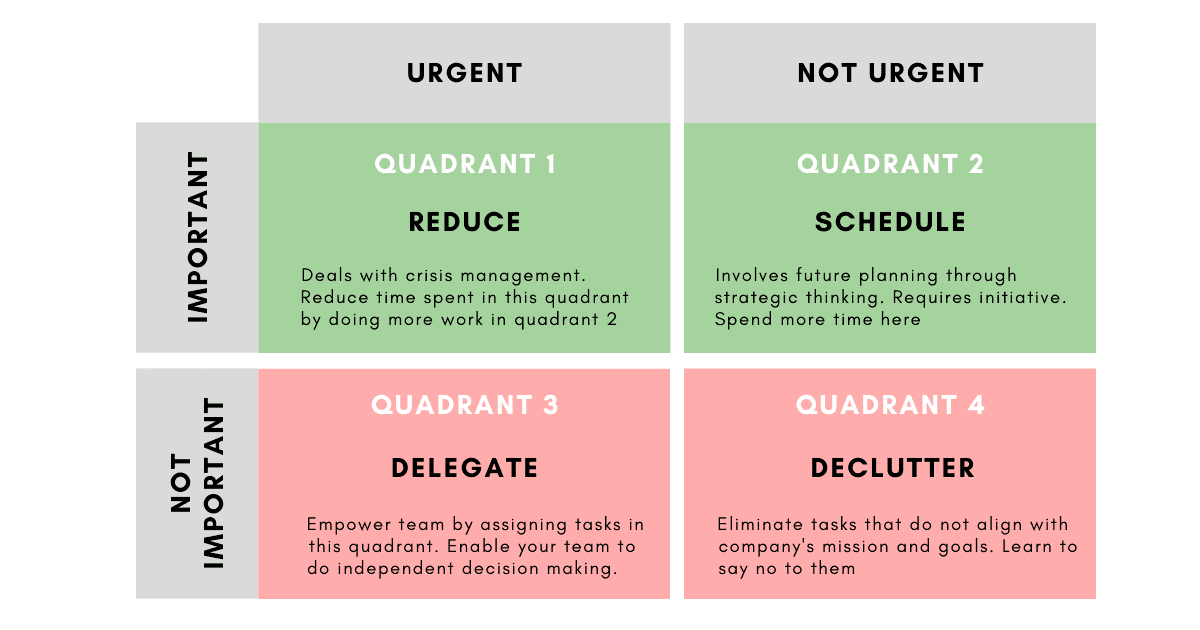
The Eisenhower Matrix helps you understand how to execute on tasks specifically based on these two components: importance and urgency, image below. You’ll see the color separation of tasks to prioritize (green) and tasks you should not be working on (red).

This matrix will help you answer the question: what should I prioritize?

Eisenhower Matrix: How to Prioritise and Master Productivity | TechTello
Image Source: TechTello

Understanding the Quadrants

When using the Eisenhower Matrix for tasks, it’s important to understand how your tasks fit into each quadrant:

Quadrant I: Important / Urgent

Action: Reduce and Execute.

Quadrant I is the combination of important and urgent tasks.

These tasks typically need no additional willpower or motivation to complete them — by nature, the external pressure applied to these tasks provides you incentive to complete them. This is because of the urgent component to these tasks; urgency provides a consequence if there is no swift action.

Productivity GIFs - Get the best GIF on GIPHY
Mood when doing Q1 tasks.

What’s at risk however, is incessant stress, anxiety, and feeling overwhelmed.

To mitigate this, you’ll need to actively manage is the number of Q1 tasks you have under your belt. How can you actively plan for future important tasks so they are completed before they become urgent?

Quadrant II: Important / Not Urgent

Action: Plan and Schedule.

The previous question transitions nicely into the second quadrant — focusing on items that are not urgent, but require intentional planning and execution to help achieve the goal at hand.

It is Quadrant II tasks that have the slipperiest slope — these are the ones that are sacrificed to doom scrolling, Netflix shows, TikTok challenges, naps… the list goes on. Because they are not urgent, there is no external pressure driving these tasks forward. Even though they are just as important as tasks in Q1, they will either:

  1. Transition into a Q1 task, adding more stress, anxiety and overwhelm to your day, or
  2. Forever move down the to-do list because of lack of urgency until eventually the task and the overarching goal behind the task, are retired into the dusty attic of forgotten dreams.
Pin on βοτσαλακια
MFW when thinking about forgotten attic dreams.

To mitigate this, understand that when it comes to energy and motivation allocation, strategize for these tasks first.

Use whatever tactics exist in your playbook to make sure these things get done: creating a false sense of urgency, strategic planning and scheduling, breaking the task down into the smallest batch, etc, it doesn’t matter. Just. Get. Them. Done.

Planning GIF by memecandy - Find & Share on GIPHY
Strategize, strategize, strategize.

Look over your to do list. Ask yourself this: what are tasks that exist in this quadrant that I often mind myself deprioritizing or putting off? What can I do to ensure I keep these tasks more top of mind?

Quadrant III: Not Important / Urgent

Action: Delegate.

Don’t let urgency fool you.

Too often our to-do lists are filled with easy, filler tasks that bring satisfaction when crossing them off. But then we find ourselves sitting back and asking ourselves: did that really help my long term goal?

This is because by nature we gravitate towards the urgent tasks, or what is known as the Mere Urgency effect.

Results of five experiments from the Journal of Consumer Research demonstrates that humans instinctively prioritize urgent tasks with fast turnaround times over other tasks with larger rewards simply because there is a “deadline” attached to it.

Research at Johns Hopkins further demonstrates that because of this “mere urgency” effect, we will likely select the unimportant task over the more essential task with the later deadline not because of any logical reason, but simply because the unimportant task has been assigned a label of URGENT.

Our brains are wired for short-term results. Fending for ourselves on the Serengeti, our primal brains are not equipped to instinctively focus on long term goals, we were rewarded with a higher rate of survival when pondering how to find the next meal, not planning out logistics for a future hunt.

Q3 tasks often create a false sense of accomplishment — you may have completed a task on the to do list, but ask yourself: did this task bring you closer or add long term value to your larger life goal? If it did not, prioritizing tasks in this quadrant will reduce the control you feel over your day-to-day life, forcing you to focus on the goals of others than your own.

As such, delegate, delegate, delegate. If these are tasks someone else can do them better, it’s in your best interest (and the team’s) to pass these off to someone so you can focus on the important tasks only you can do.

In summary,

651 Food Gifs - Gif Abyss - Page 12
Disclaimer: I don’t really drink, so this is really for comedic effect.

Quadrant IV: Not Important / Not Urgent

Action: Delete.

When researching existing articles on the Eisenhower Matrix, the majority focus on the Q1 and Q2 goals, which is fair. These are the important items that naturally get more attention. In my personal experience however, it’s just as important to understand what not to do.

Q4 is the best example of this. As James Clear mentions in his article on the Eisenhower Matrix:

Too often, we use productivity, time management, and optimization as an excuse to avoid the really difficult question: “Do I actually need to be doing this?” It is much easier to remain busy and tell yourself that you just need to be a little more efficient or to “work a little later tonight” than to endure the pain of eliminating a task that you are comfortable with doing, but that isn’t the highest and best use of your time.

James Clear,
How to be More Productive and Eliminate Time Wasting Activities by Using the “Eisenhower Box”

This is a very important question to be honest with yourself: How effective are you being with your to do list? Are you completing tasks for the sake of feeling busy? Or are these tasks that really promote long term growth?

This is probably the best low hanging fruit when it comes to triaging a to-do list. Spending a little energy now to eliminate as much of the unnecessary as possible reduces later energy output required to do these tasks that in reality, could have been replaced with things much more important.

Similar to James Clear, I find that eliminating all the non-essential tasks that can squander our finite attention allows us to pay attention to the things that matter. As a rule of thumb: get used to saying no, so you can say heck yes to the things that matter.

Tell Him Boy Bye Gif | Beyonce lyrics, Dance moves, Beyonce album

Use the hammer, find that nail

Now that you understand how to effectively use this hammer, go forth and seek out your nails — whenever you feel overwhelmed by the things you need to do, ask yourself this: is this task actually worth doing?

TL;DR

Eisenhower Matrix strategies:

  1. Understand the types of tasks you have to actively manage:
    • Important / Urgent
    • Important / Not Urgent
    • Not Important / Urgent
    • Not Important / Not Urgent
  2. Ruthlessly delete and eliminate Q3 and Q4 tasks — learn to say no to as many things as possible that are not related to your important goals related to Q1 and Q2.
  3. Understand which tasks require the most willpower to focus on. Prioritize and plan out Q2 Important / Not Urgent tasks.
comments 2

An attempt at a Non Zero Day on a Zero Day (Thus Far)

Today has been rough.

I spent most of the day embroiled in an emotionally taxing negotiation. No excuses or complaints or anything, but this meant at the end of it I was completely depleted.

AKA I’ve been sprawled on the couch from 10 AM onwards, one leg propped on the couch back, eating junk food and watching Parks & Rec while simultaneously browsing reddit on my phone the entire day.

Current mood level: Andy Dwyer with two broken legs.

Alexa: add beer bottle grabber thingy to shopping cart.

It is what it is. We all have rough days. And rough days are okay. What’s not okay however, is having a zero day.

What is a Zero Day?

A zero day is a day where you’ve done absolutely nothing to help you get closer to your goal or dream.

Even the smallest incremental step towards your goal instantly shifts this into a Non Zero Day. (I feel like this should have been branded as a One Day, but that’s just me.)

I’ve been a lurker of r/Non Zero Day for years now — it’s a frequently visited productivity / motivation based community I check when I need that extra motivational boost to get my ass off the couch.

For those struggling with motivation and procrastination, a place to share your daily progress towards your goals. In this sub, users post about how they avoided a Zero Day, share experiences, motivate and seek motivation.

r/Non Zero Day manifesto

Understanding motivation

We all understand that motivation is finite. It’s the spark of inspiration, but not the lasting flame. It won’t keep your fire burning forever.

There will be days you don’t feel like shit and don’t want to do anything. (Personal example, today.)

Even on those days, fight the good fight and power through it. Don’t let the dying spark of motivation fade, dig deep to produce at least one result towards your goal.

Motivation is finite true, but do not forget that it can also be replenished.

Having a Non Zero Day is one of the ways you can replenish motivation. Fighting your internal procrastination is one way to reassert to yourself that: I am someone that sticks with my goals. This reinforces your own perception of yourself and can be an instant dopamine booster.

Generating the willpower to do the smallest task is a measure of consistency. On days when you especially don’t feel like it, having the mental fortitude to commit to this smallest action can transform into a waterfall of additional productivity. Sometimes, all you need to do is to get started. (Some days, mind you, not all. I have a feeling today is not one of those days for me).

As @visualizevalue eloquently puts it, consistency creates competency. And what is consistency?

To show up for your goal.
To keep trying.

And on days when you don’t want to, to do it anyway.
Even if it’s the smallest step.

Or, in an *attempt* to bring this article full circle, help yourself help your future self by having a Non Zero Day.

For me, a Non Zero Day these days means practicing my writing to hone clarity of thought and communication. That means my goal is to write one paragraph. An outline. A title for the next piece. Anything.

It’s currently 10:30 PM. I have about an hour and a half to have some sort of result or output to compensate for an otherwise useless day. And so, I’m attempting to write this one article. I already know from the onset that this article will be a rambling stream of consciousness mini-personal-pep-talk-to-myself / really should probably be a personal journal entry.

But it still represents practice. And that is key.

And so, I’ll end this mini personal pep talk with these two questions:

  1. What is the top priority goal you have at the moment?
  2. What is the smallest, actionable step you can take to make progress?

Lastly, in an attempt to psych myself up to publish a less than perfect piece of content, here are some Leslie Knope positive motivation gifs.

Because I — and you — got this. Let’s make this a Zero to One [Day].

Draft complete: 11:11 PM. I’ll take it as a good sign.

comments 4

Art of Managing Yourself: Things I’ve Learned

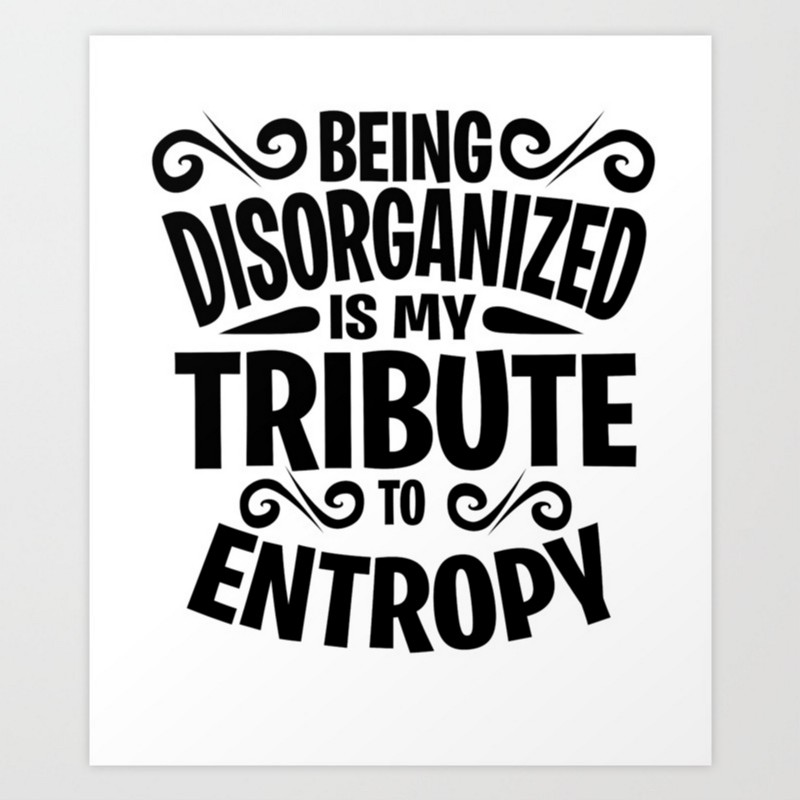
If there is one fundamental principle I live by, it is to remember the second law of thermodynamics: that everything is subject to entropy and decay.

In less intense terms, it literally means everything is falling apart slowly.

Print by DH Designed
Art print by DH Designed

After a certain point, the majority of your energy is not spent on creation, but maintenance. This means preventing orderly systems from falling into disorder.

AKA chaos.

Existence, as it seems, is chiefly maintenance.

Kevin Kelly, The Inevitable

How often have you experienced a situation where you start the day happy and sunny, coffee in hand but it quickly devolves into a day with helmet on, water hose attached, and you, face smeared and hair singed, putting out rapid fires in succession?

That, my friend, is the chaos that must be so actively managed. The takeaway here is the value in managing oneself, to maintain order.

One of the biggest life lessons I’ve learned so far is the importance of managing myself to stay focused and attentive to my goals.

Without expending energy on self-management, you won’t be able to keep order and subsequently, intentionally plan for optimal outcomes.

My 5 rules for self-management:

  1. Actively manage key categories.
  2. Focus on systems and routines.
  3. Treat yourself like your own CEO.
  4. Prioritize the organization of your headspace.
  5. Maintenance, maintenance, maintenance.

Rule #1: Actively manage these four things.

Our lives continue to grow increasingly complex due to the many data inputs we receive in our day to day. This becomes subject to overwhelm and anxiety. The easiest way I’ve found to quell this is to have things grouped together in an organized format.

I’ve found that ensuring these four are organized is one of the best ways to minimize stress and anxiety:

  • Physical items
  • Digital items
  • Thoughts
  • Time

This way, I can a) reference things quickly when I need to, and b) add updates to layer on existing foundations.

#konmari, useful physically and digitally

By focusing on these four large categories, it becomes an easier decision making process and something that requires less mental energy to maintain.

This advice is related to the #konmari philosophy, but extended beyond Marie Kondo’s focus on the home. Having a place to store and organize the items mentioned above allows for easy access that encourages productivity, saves time, and most importantly, reduce stress.

In my home, every item (physical and digital) has its own unique category or place.

What this means: my home items are routinely organized and decluttered, and the same goes for digital items. Physical items are designated their assigned place and routinely put away. Digital items are filed away (at some point) and routinely deleted or cleaned up.

Every Sunday, my husband and I have a ritual of re-organizing the house and our phones, computers, and key documents to ensure things are properly cleaned up.

Take action: What areas feel messy? Take mental inventory of the things that feel disorganized in your life. Once you’ve identified the categories, you can begin working on organizing one category at a time.

Time to declutter, assign a space, and file away promptly.

Rule #2: Systems and routine help automate recurring tasks.

Systems are important. So, so important. As James Clear eloquently paraphrases:

You do not rise to the level of your goals. You fall to the level of your systems.

Your brain energy should be dedicated to creative work and decision making or analytical tasks only. Trying to remember recurring tasks and your to-do list is, in my not-so-humble-but-should-be-humble opinion, a waste of mental energy.

What helps scale organization as life become more complex is creating specific systems and documenting the steps you need to follow. What I’m talking about, in essence, is standard operating procedure (SOP).

SOPs are put in place in large organizations as a way to provide detailed instructions to carry out a task. By applying this concept towards your daily life, you’ll be able to follow a checklist that, over time, can become automatic.

That my friend, is the sweet spot you want to be at. Where the consistent frequency of a behavior becomes habit.

This way, brainpower is no longer needed to stop and remember rote tasks. Before long, due to repetition they become automatic and save us significant time.

Additional Reading: Systems Thinking, Systems Tools, and Chaos Theory

Take action: What are rote tasks you do that remain consistent over time? For ex: Morning routine? Packing list? Cleaning checklist?

Figure out what you can begin compiling into a checklist that will save you the headache of trying to remember later.

Rule #3: Treat yourself like your own CEO.

I might be slightly biased here as I’m also a startup founder and CEO, but I see very similar mentalities when it comes to CEO life and self-management.

CEO’s are required to understand at a high level what is going on within their business on a daily basis — the financial, operational, sales status of the business as a whole.

As such you should be prioritizing understanding at a high level, the status of key aspects of your life (which are up to you to determine).

Insert power stance here.

Take action: Using the analogy of a business, what are the key categories in your life that you need to consistently maintain? For ex: Physical Health? Financials? Relationships? Personal Growth? etc.

Identify these categories and begin asking yourself what do you need to get these categories in order.

Rule #4: Beyond organizing your digital and physical items, it’s important to organize your mind.

Out of these five rules, the most complicated to manage is perhaps this one. Rule #4 applies to multiple aspect of your headspace: managing your knowledge and thoughts, your emotions, and managing attention.

I’m pretty sure this can be an entire post itself down the road.

But in the meantime, I just wanted to highlight the importance of maintaining these components.

It is important to establish a centralized repository to house all your thoughts, ramblings, knowledge, notes, etc that is organized in a very searchable format. (Think Google search life hacks)

Life experience can’t all be stored in the brain, it needs to be jotted down somewhere.

How important is it to know Aunt Ida’s favorite ice cream? If it’s important, jot it down somewhere that can be easily searched and filtered.

I have three systems: OneNote for general note-taking, my own online journal for stream of consciousness brain dumps to organize my thoughts, and TextEdit as a catch-all. Notes from TextEdit are usually then filed away or organized elsewhere.

Take action: How do you currently keep your thoughts organized? What do you do to clear your head? is it currently working for you, or can it be improved?

Rule #5: Nothing is forever, the key is maintenance.

None of these tasks are a do-it-once-and-you’re-done type deal, conscious effort is required to continually maintain and keep things up to date.

Remember: things are always falling apart. Make sure to put them back together again when they do.This means setting a consistent cadence.

Don’t get me wrong, this can get exceedingly exhausting, so it’s important to justify a cadence that works for you.

For ex: we review finances daily, and then at the end of the week we commit to a deep end of week review to assess how our budget looks going forward.

Take action: Of the things that require constant repetition, what cadence is required? For example, what are daily activities, weekly, monthly, quarterly, etc.


If this is overwhelming, I understand. It’s important to take things in stride: start small and focus on one item at a time. Assess progress, adjust and tweak as necessary and proceed only when the level of mental challenge has reduced enough for you to tackle the next category or rule.

And remember, life is meant to fall into chaos. It’s inevitable. But choice is yours to prevent it.

TL;DR

The 5 Principles of Self-Management:

  1. Actively manage these four things: physical items, digital items, thoughts, and time.
  2. Focus on systems and routine to automate recurring tasks.
  3. Treat yourself like your own CEO.
  4. Beyond organizing your digital and physical items, it’s important to organize your mind.
  5. Nothing is forever, the key is maintenance, maintenance, maintenance.
comment 0

Book Reflection: Boomerang

Boomerang is not a top ten book of all time for me, but his storytelling was engaging enough to make me reflect.

Because this book was written in 2011, I wonder if it’s focus on sovereign insolvency due to amoral behavior and cheap credit didn’t resonate as strongly for me because it is now dated. Or it could be his writing and storytelling style, and how the author tends to impose his personal bias so strongly on the reader. Some of his descriptions of Icelanders, the Irish, Greek, Germans etc, are cringeworthy if not borderline racist.

But anyway. I digress.

As much as I disliked the book, the takeaway that I’m starting to realize that ties together with so many readings is the focus on self-regulation and human psychology:

He mentions (I wish more extensively), a changing environment that has not changed human wants and desires. Our brains evolved to survive on the savannah, an environment driven by scarcity and that has not adapted to the modern environment of abundance we now live in.

Michael Lewis argues this thesis from a financial standpoint — that when circumstance allow credit to run wild, such as the 2007 peak, we continue to operate with a scarcity mindset that ultimately leads to government bailout and insolvency.